 Lexis Nexis
 -

Electronic Discovery
and Evidence PublicationsLaw Partner Publishing
Arkfeld on Electronic Discovery and Evidence, Fourth Edition
Stay apprised on how courts are ruling on electronic discovery issues, gain authoritative, comprehensive guidance, reference clear explanations of technical concepts and more with Arkfeld on Electronic Discovery and Evidence.
-
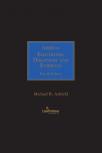 Arkfeld on Electronic Discovery and Evidence$381.00
 -
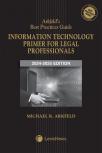 Arkfeld's Best Practices Guide: Information Technology Primer for Legal Professionals$224.00
 -
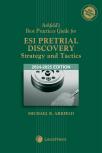 Arkfeld's Best Practices Guide for ESI Pretrial Discovery - Strategy and Tactics$224.00
 -
 Arkfeld's Best Practices Guide for Legal Hold$230.00
 -
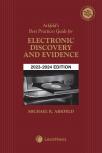 Arkfeld's Best Practices Guide for Electronic Discovery and Evidence$230.00
Arkfeld on Electronic Discovery and Evidence, Fourth Edition
 Your discovery process involves electronic evidence and electronically stored information (ESI) more than ever before. Mastery of e-discovery is essential—whether you need a basic understanding of the language and the risks, or need advice on managing ESI and uncovering hidden electronic evidence. All litigators must stay apprised on how courts are ruling on electronic discovery issues. Arkfeld on Electronic Discovery and Evidence, Fourth Edition provides comprehensive guidance, with clear explanation of the technical concepts, as well as discussion of the latest legal developments in this area.
Your purchase of the 1,500 page treatise includes a copy of each of the four companion Best Practices Guides, which are cross-referenced to the treatise and a companion downloadable Folio file. See details below.
Summary Table of Contents
Acknowledgements
E-Discovery Resources
Table of Contents
Preface
Chapter 1. Electronic Information in Litigation
Chapter 2 Creation and Storage of Electronic Information
Chapter 3 Structure and Type of Electronic Information
Chapter 4 Computer Forensics, Experts and Service Bureaus
Chapter 5 Search, Technology and Cost Issues in Managing ESI
Chapter 6 Discovery and Production Process
Chapter 7 Court Procedural Rules and Case Law
Chapter 7 Appendix: State Cases and Rules Summary
Chapter 8 Admissibility of Electronic Evidence
Appendix — Checklists, Forms and Guidelines (CD-ROM only)
Table of Cases
Glossary
Index
Order Arkfeld on Electronic Discovery and Evidence, Fourth Edition today!
Companion Downloadable File and Best Practice Guides
Benefit from the convenience of the companion downloadable file which is exclusively available to print subscribers of Arkfeld on Electronic Discovery and Evidence. Built on the Folio platform, the file is fully searchable and easy to navigate. It contains the full text of the Treatise and the Best Practices Guides with hypertext links to the referenced case law and statutes materials cited by the author. The file also includes checklists, practice forms, guidelines, and many other resources. All the materials, including cases, are contained on the file itself – no need to go online! The user-friendly and intuitive interface allows you to take advantage of improved search technologies, as well as to print, copy and paste, and save material to your computer.
Your purchase and subscription to Arkfeld on Electronic Discovery and Evidence in print includes the downloadable file and a single copy of each of the four Best Practice Guides listed below.
Arkfeld's Best Practices Guide: Information Technology Primer for Legal Professionals
Arkfeld's Best Practices Guide for ESI Pretrial Discovery-Strategy and Tactics
Arkfeld's Best Practices Guide for Legal Hold
Arkfeld's Best Practices Guide for Electronic Discovery and Evidence
About Michael R. Arkfeld, Esq.
 Michael
Arkfeld is the Director of the eDiscovery, Digital Evidence & Legal Analytics Program and a Faculty Fellow at the Sandra Day O’Connor College of Law at Arizona State University. This program hosts the annual ASU-Arkfeld eDiscovery and Digital Evidence Conference held in March
of each year. Mr. Arkfeld was also one of the primary instructors at the Georgetown eDiscovery Academy held annually in Washington DC. Michael is also the Founder and Director of Education for the eDiscovery Education Center (www.edec.com).
Michael
Arkfeld is the Director of the eDiscovery, Digital Evidence & Legal Analytics Program and a Faculty Fellow at the Sandra Day O’Connor College of Law at Arizona State University. This program hosts the annual ASU-Arkfeld eDiscovery and Digital Evidence Conference held in March
of each year. Mr. Arkfeld was also one of the primary instructors at the Georgetown eDiscovery Academy held annually in Washington DC. Michael is also the Founder and Director of Education for the eDiscovery Education Center (www.edec.com).
As a former assistant United States Attorney for the District of Arizona, Michael Arkfeld handled multimillion-dollar cases involving personal injury, medical malpractice, wrongful termination, and a host of other tort claims. He has appeared before both federal and state appellate courts and has extensive experience in jury (over 30 trials) and bench trials. Since 1985, Mr. Arkfeld has incorporated personal computers extensively in his legal practice and lectures throughout North America and internationally on the impact of technology on the practice of law and the discovery and admission of electronic evidence. Michael Arkfeld is also the primary instructor for several online courses on electronic discovery and digital evidence.
Michael Arkfeld is the author of Arkfeld on Electronic Discovery and Evidence (4th ed.) treatise and numerous Best Practice Guides. The treatise is cross-referenced with the Best Practices Guides for Electronic Discovery and Evidence; ESI Pretrial Discovery Strategy and Tactics; Legal Hold; and IT Primer for Legal Professionals. In addition, Michael authored The Digital Practice of Law (5th ed.): A Practical Reference for Applying Technology Concepts to the Practice of Law (2001 ed.).
Michael Arkfeld was the recipient of the national 2004 E-Evidence Thought Leading Scholar Award and was presented the President’s Award from the State Bar of Arizona in 1996. Mr. Arkfeld is a licensed attorney in the state of Arizona. He was the past chairman of the Task Force on Integrating Technology into the Justice System for the State Bar of Arizona.
Michael Arkfeld has been the editor of the E-Discovery Supplement to the American Lawyer and Corporate Counsel magazines published by American Lawyer Media. He is a past columnist for the Arizona Attorney magazine and a contributing writer to the American Bar Association Journal and a variety of other legal publications.
Michael Arkfeld received his J.D. from the University of Nebraska College of Law in 1975. He can be reached by email at Michael@Arkfeld.com. His web sites at Arkfeld and Associates (www.arkfeld.com) and eDiscovery Education Center (www.edec.com) feature electronic discovery educational initiatives, and other litigation and law office resources.