Latest Blogs
We're pleased to present this month's collection of newly reported cases covering various practice areas, including Civil Procedure, Criminal Law, Contract Law, Land Law and more. Each case includes catchwords...
Watch Federico Fabiano, Head of Legal and Compliance at Hex Trust, explain how Lexis+ ® Hong Kong with Protégé supports confident legal decision‑making in a complex regulatory environment. ...
Legal work is document‑led. Agreements, precedents, correspondence, and matter records sit at the centre of how advice is formed and how drafting decisions are made. The challenge is not access to those...
Legal work rarely happens in isolation. Alongside legal analysis, there is always supporting work—background research, drafting, translation, and general information gathering—that sits around and informs...
HONG KONG, April 2026 — LexisNexis ® Legal & Professional , a leading global provider of AI‑powered analytics and decision tools, today announced the availability of LexisNexis Protégé General AI for customers...
Legal work is document‑led. Agreements, precedents, correspondence, and matter records sit at the centre of how advice is formed and how drafting decisions are made.
The challenge is not access to those documents. It is keeping them usable as work progresses—especially when analysis, drafting, and review happen over time, not in a single sitting.
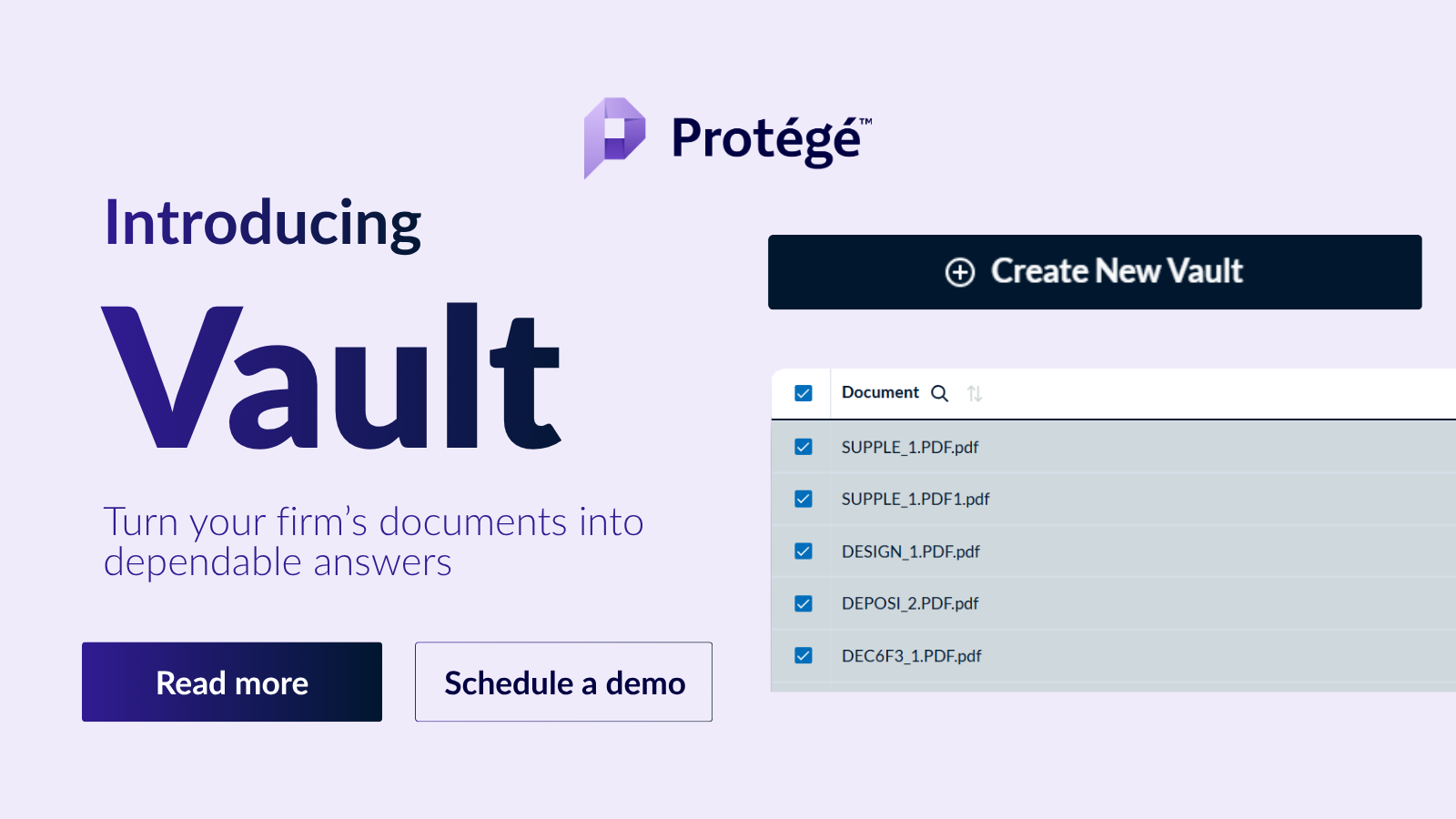
Protégé Vault is designed with that reality in mind.
Vault provides a secure, persistent workspace within Protégé where your firm’s documents remain available throughout the life of a matter. You can return to the same materials to continue analysis, refine drafts, or revisit earlier questions, without having to recreate context.
Moving beyond generic responses
Many AI tools treat documents as one‑off inputs. Files are uploaded for a task, used once, and then discarded. That approach can work for simple requests, but it breaks down quickly when work needs to be validated, reused, or aligned with firm standards.
Vault works differently.
With Vault, you can generate answers and drafts grounded in your own firm’s documents. Your precedents, playbooks, and prior work remain part of the workflow, rather than being replaced by generic outputs.
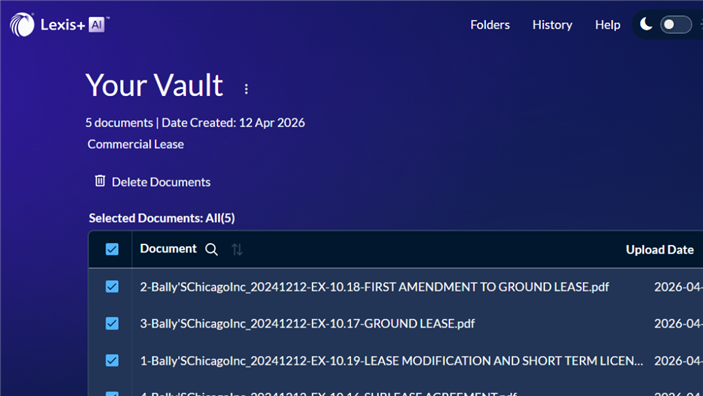
Because questions, extracts, and drafts stay connected to their source materials, it is easier to review how an answer was reached and to stand behind the work with confidence.
Built around how legal work actually happens
Vault is designed to support day‑to‑day legal work, not isolated tasks.
Answering questions using firm documents
- When you ask questions in Vault, responses are generated from the documents you have chosen to work with. This helps ensure that advice reflects internal standards and prior work, rather than relying on generalised responses.
- Keeping answers tied to source materials also makes review and verification more straightforward, particularly when advice needs to be shared or revisited.
Working through large sets of documents
- Legal matters often involve reviewing and synthesising large volumes of material. Vault allows you to summarise and analyse document sets in one place, without losing track of where conclusions come from.
- Insights remain connected to the documents they are based on, which helps maintain clarity as work progresses.
Creating timelines and chronologies
- Understanding how events unfold over time is critical in many matters. Vault supports the generation of timelines and chronologies directly from matter‑specific documents, helping surface key dates and sequences without manual reconstruction.
Identifying key entities
- Vault can help identify parties, organisations, and dates across document collections. This can be particularly useful in document‑heavy matters, where relationships and patterns may not be immediately obvious.
Drafting with firm knowledge and LexisNexis authority
- Drafting is where institutional knowledge matters most.
- With Vault, you can draft clauses and transactional documents by working from both your firm’s own precedents and LexisNexis’ authoritative legal content. This allows internal best practice and trusted external guidance to be used together, in the same workflow.
- Vault also supports document comparison, making it easier to identify meaningful differences between versions or agreements, while keeping drafts connected to the materials that informed them.
Keeping work connected over time
Legal work evolves. Documents change. Earlier analysis needs to be revisited. Drafts are refined.
Vault allows you to organise workspaces by matter, transaction, or client, so documents and related work remain connected as things develop. You can return to saved materials knowing that context has been preserved, rather than having to rebuild it.
This continuity helps reduce duplication and supports more consistent outcomes across teams.
Designed for trust
Vault is part of Protégé’s private, secure, and authoritative AI environment.
Your firm’s documents remain yours. Customer inputs are not used to train any LLM model, and enterprise‑grade security and governance are built into the platform. This allows you to work with sensitive materials in a way that aligns with professional and organisational expectations.
A more practical way to work with firm documents
Protégé Vault supports legal work that needs to be accurate, explainable, and aligned with how your firm practises. By keeping documents available and connected, Vault helps turn existing materials into a dependable foundation for analysis and drafting.
Vault is now available to Protégé Hong Kong customer accounts, unless otherwise specified.
Explore Protégé Vault
Learn how Vault can support document‑driven analysis and drafting within your firm.
Schedule your demo
Email: marketing.hk@lexisnexis.com
Telephone number:+852 2179-7888