
The three new Criminal laws came into force on July 1, 2024, replacing the three old criminal laws, and they were repealed, by the legal implication of new laws in force.
The criminal justice system has had its own share of challenges with questions over infrastructure, laws being punishment centric, over-stretched trials, pendency, gaps and elongated investigations, overcrowded prisons with under-trial prisoners. The old laws were very much in need of changes to match up to the new age requirements, technological advancements and to fill in the identified gaps, hence, the new laws brought in an entire overhaul.
Bharatiya Nyaya Sanhita, 2023 (BNS), Bharatiya Nagarik Suraksha Sanhita (BNSS), and Bharatiya Sakshya Adhiniyam (BSA), displaced the existing Indian Penal Code (IPC), the Criminal Procedure Code (CrPC), and the Indian Evidence Act, respectively and brought in the new criminal law legislations in its place. The blog ahead, discusses the features and the important provisions of the three new laws.
Bharatiya Nyaya Sanhita, 2023: Replaces & Dislodges The Age Old Indian Penal Code, 1860
The Bharatiya Nyaya Sanhita, 2023 replaced the Indian Penal Code, that was drafted by the first law commission chaired by Thomas Babington Macaulay. Some of the crucial features and elements of the BNS are discussed below.
- Community Service- Section 4 of the Bharatiya Nyaya Sanhita provides for six types of punishments i.e. Death Penalty, Life Imprisonment (i.e. rest of the convict’s life), Rigorous or Simple Imprisonment (Nature of punishment for certain period), Forfeiture of Property, Fine and Community Service.
Community service has been added as the new type of punishment. This punishment intends to work towards reformation and restorative justice, for a convict of minor offences.Some of the offences providing this as punishments are – non-appearance in response to a proclamation, theft by 1st time convict (where the value of the stolen property is less than five thousand rupees and returns or restores the value of property), misconduct in public by a drunken person.
- Erasure of Specific Terms – Bharatiya Nyaya Sanhita, has changed or displaced references to few of the legal terms in its provisions, for better references or legal implications. The connotation or word ‘minor’ in the provisions of the Indian Penal Code has been replaced with ‘child’at all the relevant places in the BNS, as the Indian Majority Act provides for minor being a person under 18 years of age and hence identical to what is termed as ‘child’, in the law .
The word gender includes transgender. Movable properties now include property which is corporeal or incorporeal.
- Mob lynching- has been a rising concern, BNS has considered it with specific relevant provisions.
Section 103(2)- The provision covers the crime of mob lynching by a certain number of people (i.e.five or more). It punishes for murder committed by a group of 5 or more people, while acting in concert together – on the grounds of race, caste or community, sex, place of birth, language, personal belief or any other similar ground.
Section 117(4)- Voluntarily Causing Grievous Hurt- When a group of five or more persons acting in concert, voluntarily causes grievous hurt to a person on the ground of his race, caste or community, sex, place of birth, language, personal belief or any other similar ground, each member of such group shall be guilty of the offense of causing grievous hurt, and shall be punished with imprisonment of either description for a term which may extend to seven years, and shall also be liable to fine.
- Crime Against Women- The Bharatiya Nyaya Sanhita (BNS) categorically provides for distinct and specific chapter, pertinently covering crimes against woman and children (i.e. Chapter 5, Section 63 to Section 99). The provisions dealing with this category of offence under Sanhita includes sexual offences, criminal force, assault, offences related to marriage and others.
There have been views reflecting concern that this draws a parallel between the status of children and women, in terms of vulnerability, dependency or the need of protection in the societal setup. However, this also highlights that BNS identifies both of them as special categories which indeed need specific attention and categorized provisions, to deal with rising crime against them, which cannot be overlooked as a fact.
- Organized Crimes & Terrorism- Bharatiya Nyaya Sanhita, specifically carves and lays down the provisions for organized crimes and terrorism, and hence making them an offence under the BNS itself. It is noteworthy that this is a new legal provision under this substantive law which succeeds the IPC and was earlier comprehensively covered only under the special laws.S.111(1)- provides that – Any continuing unlawful activity including kidnapping, robbery, vehicle theft, extortion, land grabbing, contract killing, economic offence, cyber crime, trafficking of persons, drugs, weapons or illicit goods or services, human trafficking for prostitution or ransom, by any person or a group of persons acting in concert, singly or jointly, either as a member of an organised crime syndicate or on behalf of such syndicate, by use of violence, threat of violence, intimidation, coercion, or by any other unlawful means to obtain direct or indirect material benefit including a financial benefit, shall constitute organised crime.Section 111 covers other aspects like abetment, attempt, membership etc. as well, for the organised crime.There are other special laws that deal with the organized crime and terrorism, with special provisions and procedures, with essential safeguards in procedure, for such heinous crimes. These provisions in BNS (which is a general criminal law) now overlap and cut across other specific laws.Explanation attached to the provision dealing with terrorism i.e. Section 113(7) – states that it is for the officer not below the rank of Superintendent of Police to decide that such a case be registered under S.113 or under the special legislation i.e. Unlawful Activities Prevention Act (UAPA).
Discover the Best Books on Bharatiya Nyaya Sanhita (BNS), 2023 at LexisNexis
For astute and expert insights refer to the best of resources-
The Bharatiya Nyaya Sanhita (BNS), 2023 (45 of 2023)
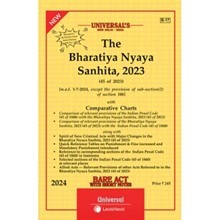
The Bharatiya Nyaya Sanhita repealed the Indian Penal Code. Bare Act is a must have resource and an all-time reference. This bare act lays out an exhaustive tabular comparison with the provisions of Indian Penal Code.
Find the three new criminal law bare acts here.
Textbook on The Bharatiya Nyaya Sanhita, 2023 by K D Gaur
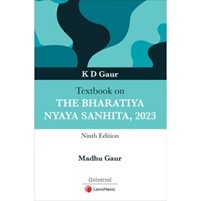
The textbook unravels an exhaustive and comprehensive commentary on new provisions of BNS as well as the old provisions that have been retained from the erstwhile IPC. For an easy reference the book provides for tabular comparison and highlights the contextual changes. The book envelops legal annexures documenting and attending the rights of accused, compensation to the victims of crime and guidelines to effectively study and understand criminal law.
The Bharatiya Nyaya Sanhita, 2023 (45 of 2023) & The Indian Penal Code (45 of 1860): A Comparison by Bharat P. Maheshwari
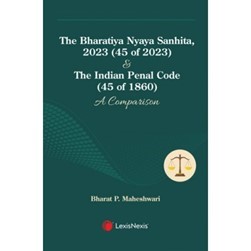
The commentary is an exhaustive and reliable resource published by LexisNexis. A reader friendly structure with an all –inclusive side by side comparative references, charts and highlighted changes.
Concise Commentary on The Bharatiya Nyaya Sanhita 2023 by Anjana Prakash & Anuj Prakaash
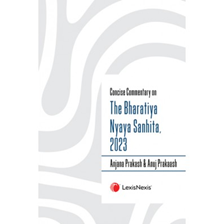
The reference book is a crisp resource with well calibrated comparative legal provisions and details and has been structured as book between bare act and a voluminous commentary. The commentary comes with a comparative contextual reference to the old law i.e. Indian Penal Code.
Bharatiya Nagarik Suraksha Sanhita, 2023: Replaces and Succeeds the Criminal Procedure Code,1973
The Code of Criminal Procedure of 1973 was framed back then as per the report of the 41st Law Commission of India and dealt with the procedural aspect of the criminal law. Some of the key elements of BNSS are discussed below-
- Citizen Centric- The Bharatiya Nagarik Suraksha Sanhita, has framed its new provisions to let the procedural provisions operate in a citizen centric manner. BNSS now provides for fixed timelines (mandatory and directory) for different procedures provided under the Sanhita, which were earlier not there or were not stringent., For an example- it now limits the number of adjournments that can be granted to only two. The law builds itself towards good governance, in effect via a time bound and accessible procedure.
- Uniformity in Court Structure & Posts – The BNSS has sewed in a thread of uniformity, by deleting certain classes of judges and posts. The designation of Metropolitan Magistrate and Assistant Session Judge has been abolished from the Sanhita and hence it brings consistency and harmony in the structure of designated posts in the courts, across the entire country. As per the new provisions – the courts will have Judicial Magistrate of the second class, Judicial Magistrate of the first class, Chief Judicial Magistrate, Additional Chief Judicial Magistrate (if any), Sessions Judge, Additional Session Judge (if any) and Executive Magistrates.
- The Medical Advancements- The new procedural law has caught up with the leap of technology, which has taken place from the time when the old criminal laws were in operation. The BNSS makes the forensic investigation and visit by the forensic investigation team mandatory, for the investigation of offences punishable for imprisonment for 7 years or more.
- The Digital Age- The world has transcended into great technological advancements and a digital era. The BNSS has duly taken cognizance of the paradigm shift and innovations and has accordingly altered & added relevant provisions. Illustratively, summons can be now served electronically and hence reducing the procedural timeline and the voluminous paperwork. The provisions endorse and aid the use of electronic communication modes and digital means, for various criminal law procedures (e.g. Accused person may be examined via electronic means).
Discover the Best Books on Bharatiya Nagarik Suraksha Sanhita (BNSS), 2023 at LexisNexis
To know more, read from the best of the picks for readers-
The Bharatiya Nagarik Suraksha Sanhita (BNSS), 2023 (46 of 2023)
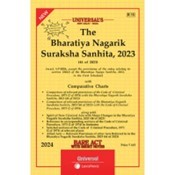
The BNSS repealed The Code of Criminal Procedure. Bare Act is a must have legal resource for professionals, academicians and students alike. The bare act rolls out a well chiselled comparison of Bharatiya Nagarik Suraksha Sanhita with the provisions of the Code of Criminal Procedure.
Find the combo of the three new criminal law bare acts here.
Ratanlal & Dhirajlal: The Bharatiya Nagarik Suraksha Sanhita, 2023
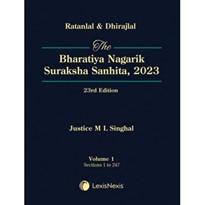
The trusted classic, methodically analyzes the provisions of The Bharatiya Nagarik Suraksha Sanhita, 2023 with corresponding references to the old provisions of the Code of Criminal Procedure, 1973. It highlights the changes, new provisions and omissions, along with landmark cases and recent judgments. It ensures that spirit and essence of the original work is maintained, preserving its relevance and applicability to both the Act and the BNSS.
The Bharatiya Nagarik Suraksha Sanhita, 2023 (46 of 2023) & The Code of Criminal Procedure, 1973 (2 of 1974): A Comparison by Bharat P. Maheshwari
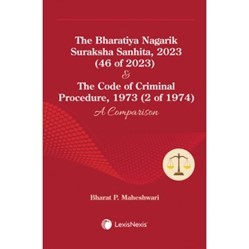
A crisp source of reference that serves the dual purpose at one place, with comparative charts and highlighted differences between the BNSS and the old provisions of Cr.P.C.
Make a wise pick, by opting for the set of comparative books on new criminal laws.
Concise Commentary on The Bharatiya Nagarik Suraksha Sanhita, 2023 by Namit Saxena
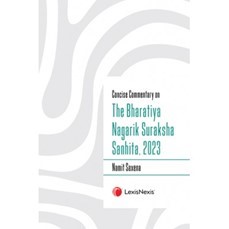
The definitive commentary is a crisp and authoritative resource book with peculiar details and has been structured as a handy guide lying between bare act and a voluminous commentary. The commentary comes with a comparative contextual reference to the old law i.e. Code of Criminal Procedure (Cr.P.C).
Bharatiya Sakshya Adhiniyam, 2023: Replaced The Indian Evidence Act, 1872
Bharatiya Sakshya Adhiniyam replaced The Indian Evidence Act, which was drafted by James Fitzjames Stephen back in the year 1872.
Some of the conspicuous features of the Bharatiya Sakshya Adhiniyam (BSA) have been rolled out here-
- Adjective Law- Bharatiya Sakshya Adhiniyam (i.e. BSA) is an adjective law in its nature, legal effect and operation. The statement of objective of the BSA specifically mentions that the Adhiniyam i.e. law of evidence is neither a procedural nor a substantive law and instead falls under the category of an adjective law that defines the pleadings and methodology by which the substantive or the procedural law are operationalised.
- Wider Scope of Documents- The BSA widens the scope of the term ‘documents’ for the purpose of evidence law and to decide as to what can be termed and admitted as a document. The expansion of scope is significant, as documents form an essential part of the materials generally termed and available as evidence (e.g. cheques, letters, CD, pen drive, written contracts etc.).
Electronic and digital records have been specifically included as documents and hence bringing them at par with and admissible like, any other document in the court. Moreover, documents under the Adhiniyam now includes, -‘matter expressed or described on any substance by any means’,and hence widening the vey scope of form of expressions. - Wider Ambit of Evidence- The Bharatiya Sakshya Adhiniyam (i.e. BSA) by expanding the scope of the term ‘document’ has widened the ambit of what is considered to be an ‘evidence’ under the Adhiniyam. Evidence under the Adhiniyam, now recognizes and includes electronic statements and electronic and digital records in the form of and at par with any other form of documents (subject to fulfilment of other legal requisites). These are admissible and legally effective like any other document in the court, for the purpose of evidence, subject to other procedural requisites or safeguards.
- Primary Evidence and Electronic & Digital Records- Earlier the electronic evidence was a special category of evidence brought in by an amendment and described as a secondary evidence by virtue of Section 65B. Now Section 57 of Bharatiya Sakshya Adhiniyam, identifies electronic records and digital records (created or stored as mentioned in the provision) in form of documents, as primary evidences.
- Widened Scope of Secondary Evidence- Bharatiya Sakshya Adhiniyam has expanded the list of evidences that can be included and admitted as secondary evidence of the fact, document or statements in question. To exemplify, the list of secondary evidences now includes oral and written admissions by any person. This enlarges the admissibility of evidences before the court.
Discover the Best Books on Bharatiya Sakshya Adhiniyam (BSA), 2023 at LexisNexis
For legal and critical reference or insights into the new evidence law refer to-
The Bharatiya Sakshya Adhiniyam (BSA), 2023 (47 of 2023)
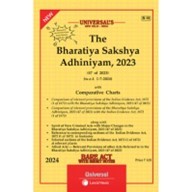
BSA repealed the old Indian Evidence Act. Bare Act is a pre-requisite and a must have, for anyone and everyone dealing in the field of law. The bare act sails an astute comparison of Bharatiya Sakshya Adhiniyam with the provisions of the old Indian Evidence Act.
Ratanlal & Dhirajlal: The Bharatiya Sakshya Adhiniyam, 2023
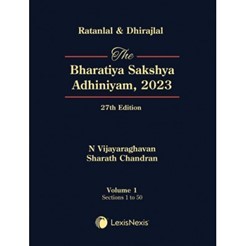
The 27th edition of the book retains its essence of being the evergreen classic reference in the field of criminal laws, while it scrupulously explains the legal provisions introduced by the Adhiniyam and categorically refers to the changes introduced via the new provisions. The commentary uncoils a feature write-up on ‘Electronic Records’ by the author. It provides for a dedicated section on omissions in the new law and a comprehensive comparative tabular analysis with the Indian Evidence Act, 1872, backed by the judicial interpretations over the years and latest updates.
The Bharatiya Sakshya Adhiniyam, 2023 (47 of 2023) & The Indian Evidence Act, 1872 (1 of 1872): A Comparison by Bharat P Maheshwari
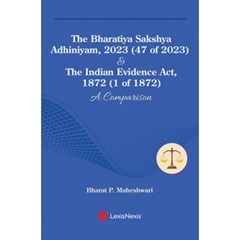
The commentary gives critical legal insights into the changes and differences between the old Indian Evidence Act and The Bharatiya Sakshya Adhiniyam and makes a side-by-side reference to them categorically. It replaces the need of carrying two voluminous book with one exhaustive and well-structured book.
Textbook on The Bharatiya Sakshya Adhiniyam, 2023 by Chief Justice M Monir
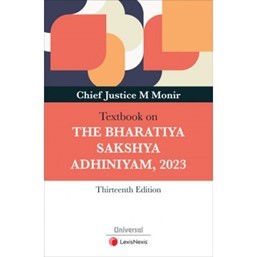
The classic and most authoritative commentary of all times, is an exhaustive section wise book on the Adhiniyam. The book provides for concurrent reference to the old provisions of the Indian Evidence Act, 1872 and highlights contextual comparative differences and modifications between the provisions of both the laws.
Concise Commentary on The Bharatiya Sakshya Adhiniyam, 2023 by Sharath Chandran
A crisp source of reference that serves the dual purpose at one place, with comparative charts and highlighted differences between the BSA and the old provisions of Indian Evidence Act. The commentary includes table of cases and insightful analysis landmark judgments
Conclusion
Concluding, the old criminal laws were enacted decades ago and the time, technology and centrifugal forces driving the crime and criminal justice system have also flown with their own good pace. In the new age where technology and digitization is what every finger swipes at, it was essential for law and courts to identify the new modes and means of crime, procedure and consequent evidences. There was a need for stricter timelines, follow-ups, reformation and victim centric approach. Hence, to adapt and adopt the contemporary needs there was need for a systematic overhaul of the criminal laws in India. The new criminal laws in place, have aimed to bridge up that gap and will see its own challenges and evolution, in effect and operation.
For more details and comprehensive reference pick Criminal Law eBook Packages-
Criminal Law Digital Bare Acts eBook Package– is a set of 21 digital bare acts that can be used for easy reference.
Criminal law Commentaries eBook Package is a set of 17 commentaries on criminal laws, including the updated three new criminal laws.
You can also subscribe to Commentaries and Digital Bare Acts eBook package of criminal laws- which is a set of 67 titles including bare acts and commentaries.
It has a comprehensive and professional range of reference resources for the subject at one place.
Build and actualise your personalized digital legal library with LexisNexis eBook packages.
Benefits of LexisNexis eBook packages:
- Freedom to choose packages as per practice area
- Get access to full year’s new titles and editions in the package
- Easy to cite in court
- Available on Desktop, iOS and Android
- Save up to 80% as compared to print prices