
Latest Articles

Summary When executive power goes unchecked A chance for solidarity among common law jurisdictions New Zealand at the forefront Beyond the minutiae The human connection Creating environments...

Summary The empathy advantage From server to cloud Competing with larger machines The Ferrari and the potholes The enduring powers problem The constant foundation Originally published...

Summary The year legal AI became real Voices shaping the profession A year worth remembering Contributors 2025 There's a curious phenomenon about how we experience time. When our days are...

Summary The problem with platform hopping How the models differ Security without compromise Beyond legal research The speed of adoption Originally published by NZ Lawyer . Republished...

Summary Introducing Protégé General AI General AI Models Available in Protégé for New Zealand Legal Workflows Practical Use Cases for Lawyers But as AI becomes more common in legal practice...
Summary
- Introduction
- Outdated Court Buildings and the Imperative for Modernisation
- The Burden on the Legal Profession
- The Cost Conundrum: Access to Justice
- Safeguarding the Legitimacy of the Judiciary
- Digital Transformation and the Promise of Te Au Reka
- Transparency: Bridging the Gap with the Public
- Stability Amid Change
- Gratitude and Collective Responsibility
Introduction
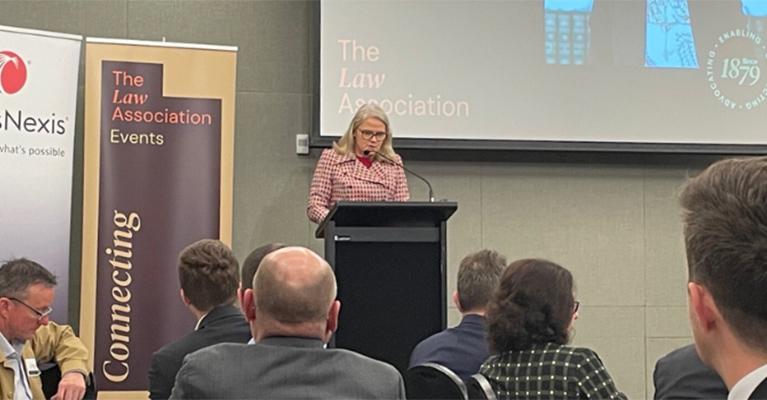
At a recent breakfast event in Wellington sponsored by LexisNexis and hosted by The Law Association, Chief Justice Dame Helen Winkelmann, a respected jurist with a wealth of experience, recently addressed the Law Association members in a compelling speech. Her reflections shed light on critical issues facing our legal system and provide a roadmap for navigating the complexities ahead. In this article, we* summarise her key points, emphasising the need for innovation, collaboration, and unwavering commitment to justice.
Outdated Court Buildings and the Imperative for Modernisation
Dame Winkelmann’s opening remarks centred on the physical spaces where justice unfolds—the court buildings. She eloquently pointed out that these structures were conceived in a different era, shaped by different values. However, they now serve a world vastly different from the one their architects envisioned. In today’s courts, complainants interact closely with defendants and their families—a reality not anticipated when these buildings were erected. Moreover, security risks have escalated, demanding robust safety measures. Dame Winkelmann emphasised the urgent need for modernization, advocating for spaces that enhance accessibility, efficiency, and user experience. The digital strategy launched in 2023 aims to address these challenges, leveraging technology to transform court facilities.
The Burden on the Legal Profession
Dame Winkelmann’s empathy for legal professionals resonated throughout her speech. She acknowledged the mounting stress faced by lawyers, judges, and support staff. The relentless caseloads, intricate legal issues, and emotional toll exact a heavy price. Burnout and mental health struggles are real. Dame Winkelmann called for a collective commitment to well-being. Support systems, counselling services, and open dialogue within the legal community are essential. After all, a resilient legal workforce is crucial for upholding justice.
The Cost Conundrum: Access to Justice
Access to justice should be universal, but financial barriers persist. Dame Winkelmann dissected the rising cost of practicing law. Aspiring lawyers grapple with student debt and the daunting prospect of establishing a practice. Clients, too, face affordability challenges. The legal system must find innovative ways to reduce costs without compromising quality. Streamlined processes, alternative fee structures, and community legal clinics are part of the solution. Collaboration between legal practitioners and policymakers is imperative.
Safeguarding the Legitimacy of the Judiciary
In an era of scepticism, the judiciary’s legitimacy hangs in the balance. Dame Winkelmann stressed transparency as the bedrock of public trust. Clear, well-reasoned judgments foster confidence. She commended New Zealand’s respectful interplay between branches of government—a model for democratic harmony. Upholding ethical conduct, avoiding conflicts of interest, and maintaining independence are non-negotiable. The judiciary’s integrity is paramount.
Digital Transformation and the Promise of Te Au Reka
Te Au Reka—the digital case management system—captured Dame Winkelmann’s enthusiasm. Its potential to revolutionize case handling, reduce delays, and enhance access to justice is immense. But she didn’t stop there. Dame Winkelmann explored the role of artificial intelligence (AI) in legal processes. Responsible AI implementation could streamline research, improve decision-making, and ensure consistency. However, she cautioned against blind adoption, emphasising rigorous oversight and bias mitigation.
Transparency: Bridging the Gap with the Public
Dame Winkelmann urged judges to communicate effectively. Legal jargon must yield to clarity. Accessible judgments empower citizens, demystifying the legal labyrinth. Community engagement—through public talks, educational programs, and outreach—bridges the gap. The judiciary’s work affects lives; understanding it is a civic right. Transparency builds trust, reinforcing the judiciary’s role as a guardian of justice.
Stability Amid Change
Dame Winkelmann’s eloquence shone as she advocated for “stability with change.” Innovation need not erode core principles. The law adapts, but its essence remains constant: fairness, equity, and societal well-being. Stability ensures continuity; change fuels progress. The delicate balance is our compass.
Gratitude and Collective Responsibility
In her closing words, Dame Winkelmann expressed gratitude for the legal community’s strength. Collaboration—among judges, lawyers, policymakers, and citizens—is the linchpin. Challenges are shared burdens; opportunities, collective triumphs. Together, we shape a resilient, just legal system.
Dame Helen Winkelmann’s wisdom reverberates beyond the courtroom. Her call to action echoes through legal chambers, inspiring us to embrace challenges and seize opportunities. As we navigate the evolving landscape, let her words guide us toward a brighter, more equitable future.
*This article is based on the author's (LexisNexis marketing) summary, recollection and notes taken from the event. It is not a direct representation of the Chief Justice of New Zealand Dame Helen Winkelmann's keynote address and views, nor has it been approved or signed off by Dame Winkelmann.
Discuss the legal technology solutions offered by LexisNexis to legal professionals by reaching out to us through the form below: