
25 Nov 2025
Get the Big (Analytics) Picture: Lex Machina® Multiplies Coverage with Docket-Level Data
Lex Machina, the LexisNexis® Legal Analytics® platform, has integrated data from the broader Lexis® ecosystem, including CourtLink®, to surface results from all U.S. state courts with docket activity. The expansion adds docket-level data for 1,200 new state trial courts alongside our existing enhanced analytics, allowing professionals to identify litigation patterns for attorneys, law firms, and judges through a broader collection of venues than ever before.
This top customer request delivers unmatched visibility into the litigation experiences of counsel and judges nationwide. With valuable new insights across jurisdictions within a unified research experience, professionals with Lex Machina quickly and easily surface the “big picture” of litigation data analytics available for judges, law firms, and attorneys of interest.
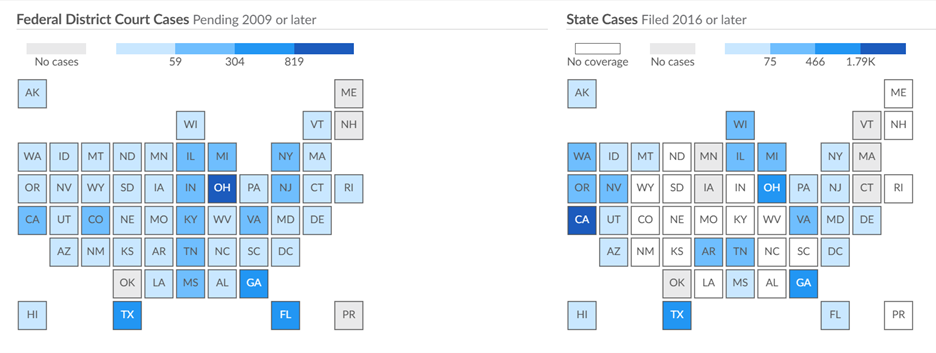
Litigation Footprint, Expanded
Among other benefits, the addition of docket-level data to Lex Machina means that it is faster and easier to identify an attorney or law firm’s history of experience throughout U.S. federal courts and more than 1,300 state trial courts. As part of the update, we have enhanced our interactive Litigation Footprint feature to reveal where firms and attorneys of interest have litigated, with the ability to view, filter, and export all related cases in moments.
For the first time, users can see who is driving litigation activity across courts and jurisdictions. This visibility empowers professionals to uncover relationships, track trends, and make data-driven decisions that strengthen case strategies, competitive analyses, and business outcomes, while reinforcing Lex Machina as the leading source for connected, data-driven litigation intelligence.
This addition complements the continuing ability to map companies’ and individuals’ litigation experience across the same breadth of courts in the Litigation Footprint feature.
Docket-Level Data Alongside Enhanced Analytics
The addition of docket-level data for more than a thousand new courts includes analytics for judges’ case-volume experience, where available. For more cases than ever, legal professionals with Lex Machina can assess the workload and relevant experience of their assigned court and judge. This enhancement makes Lex Machina an even more powerful, reliable starting point for court and judge insights.
Our customers told us that this is important to them because it provides them with seamless access to courts and judges across all jurisdictions from which LexisNexis collects case activity data, enabling fully integrated, comprehensive legal analytics within Lex Machina. Although fewer than half of state court docket sheets include information about the judges (or counsel) involved, this expansion significantly broadens visibility into litigation activity and strengthens the analytical foundation for future enhancements, including additional courts with enhanced analytics coverage.
Streamlined Workflows for Lawyers and Allied Legal Professionals
Litigators rely on Lex Machina to evaluate claims, select venues strategically, inform motion strategies, negotiate settlements, prepare for trial, and guide appellate decisions. Perhaps equally as important, litigators with Lex Machina benefit from the ability to understand the experience of their judges and opposing counsel quickly and easily. With the addition of docket-level data to Lex Machina, litigators can identify the relevant case-volume experience for a given judge, attorney, or law firm throughout a growing variety of more than 1,300 state courts.
Law firms and solo practitioners rely on case alerts and powerful insights from Lex Machina to showcase their litigation successes, identify promising potential clients, and stay alert for new opportunities. With the expanded ability to generate dynamic “block maps” that demonstrate their firm’s experience nationwide, firm administrators, partners, and business-development directors can add compelling impact to their RFPs and marketing communications. For competitive intelligence, firms also benefit from the new ability to quickly understand rival firms’ litigation experiences across the country.
Companies and their corporate counsel rely on Lex Machina to choose the right outside litigation counsel, assess liability risks, and inform negotiation strategies. The addition of docket-level data that captures attorneys’ and law firms’ case-volume experience across more than a thousand new courts enables general counsel and insurance representatives to evaluate the experience of potential outside counsel through a broader lens than ever.
The Legal Analytics Platform, Now for More Lawsuits Than Ever
This expansion provides the most comprehensive court coverage in litigation data analytics, meeting a key customer demand for broader access and integrated insights. By uniting enhanced and docket-level data across jurisdictions, Lex Machina empowers users to identify patterns, compare experience, and form data-driven strategies from a single platform.
For each case that matters to them, companies and law firms with Lex Machina easily discover who won, how much was awarded, by what procedural means, under what findings, how long it took, and more – along with key experience metrics for each court, judge, law firm, attorney, and party. Now more than ever, powerful analytics and exclusive insights from our platform enable legal professionals to complete common workflows with confidence and precision.
In an April 2025 survey, over 95% of law firm professionals agreed that data analytics are valuable to their practices. Ready to move from conversation to action? Visit the Lex Machina product page for more information and to sign up for a free demonstration and customized analytical report.
FAQs
- How does the new docket-level data improve litigation workflows?
Within a unified research experience, professionals with Lex Machina now seamlessly access state and federal court data in one integrated search. The expansion enables companies and law firms to uncover trends in judges’ and counsels’ litigation experience across 1,300+ state courts and all federal district courts. This enables professionals to understand who is driving cases, where they occur, and how frequently.
- What’s the difference between “enhanced” analytics in Lex Machina and newly added “docket-level” data?
Docket-level data, by its nature, is more limited than the additional insights that Lex Machina provides for courts with enhanced coverage – for which Lex Machina derives exclusive insights via subject-matter experts’ manual review of case filings. Unlike the newly added courts with “docket-level” coverage, courts within our enhanced analytics coverage include data for lawsuit outcomes, such as motion grant rates, case resolutions, findings, damage awards, equitable remedies, and timing until key milestones. Courts with enhanced analytics coverage in Lex Machina include all federal district, circuit, and bankruptcy courts, the Patent Trial and Appeal Board (PTAB), and more than 100 state courts.
- Why aren’t all state courts “enhanced” in your analytics coverage?
Enhanced analytics in Lex Machina are made possible by our unique blend of artificial intelligence alongside manual review by subject-matter experts for the briefs, pleadings, motions, orders, and other documents filed for commercially relevant civil cases within a given court. Most state courts have not made such documents available in bulk for commercial use.