
The Next Chapter of Legal Innovation Starts in Raleigh
LexisNexis' Technology Center is defining trusted AI
By: Corinna Bold | April 30, 2026
“What does vibe coding look like at LexisNexis? It’s getting into a room with our engineering teams, product managers and user experience designers, rapidly unpacking requirements for a feature they are planning, and then iteratively building it in real time,” explains Natalie Simberg, vice president of technology, strategic programs and optimization at LexisNexis Legal & Professional. “And that process can take just a few hours. It’s extraordinarily fast.”
What Simberg is describing is a process whereby an AI agent can take a request written in plain English and turn it into working code, carrying out steps along the way instead of requiring the user to guide every part of the process, only stepping in when input or clarification is actually needed. This changes everything, she says. First there’s the speed at which new products can be developed, customer requests fulfilled and problems solved. But as importantly, the technology opens the door to a new type of collaboration: one that is multidisciplinary and unites software design experts and non-tech professionals.
“It democratizes the ability to build technology solutions,” says Jeff Pfeifer, chief product officer at LexisNexis Legal & Professional, part of RELX. “And that’s a fundamental change whose impact we’re only just beginning to see.”

Democratized, multidisciplinary collaboration is now driving all the work the company does to build tools that help its customers — law firms, corporate legal departments and other legal teams — make faster and more informed decisions, whether they’re drafting documents, performing legal research, managing litigation or conducting due diligence.
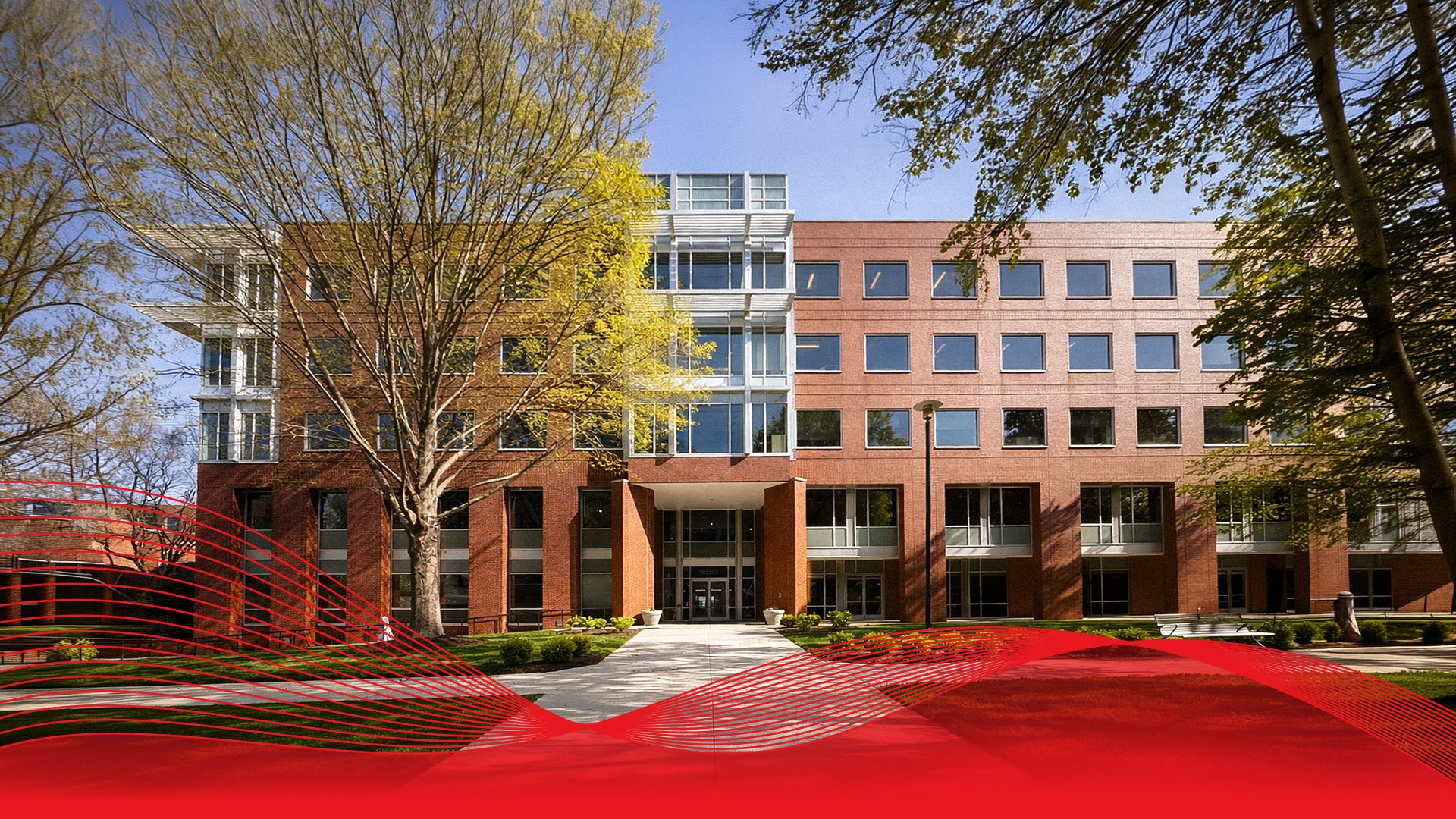
With its technology center now housed in a new building in Raleigh, North Carolina, at the heart of NC State University’s 1,300-acre Centennial Campus, the company brings together more than 800 programmers, analysts, legal and business experts, sales and marketing teams and support staff, all focused on building transformative tools for the legal sector.
These days, LexisNexis needs to move ever faster to meet the needs of these customers. It serves a sector that has in recent decades transformed itself from digital laggard to technological leader. Today, legal professionals deploy strategies that rely on the data in everything from social media and news reports to dockets, pleadings and motions.
As an early adopter of a wide range of technologies, the sector is experiencing a tech transformation that just got turbocharged by agentic AI. “In the next three years, there will be more change to the way lawyers work than there has been in the entire time lawyers have been practicing,” says Pfeifer. “The workforce will grow substantially with the advent of agents, and we need to fast-cycle to deliver these new capabilities.”
This means LexisNexis is turning ideas into professional-grade legal AI solutions at lightning speed. That pace is already visible in the market. Lexis+ AI quickly became the fastest adopted product in LexisNexis’ history, underscoring both customer demand for AI-powered workflows and the company’s ability to deliver innovation at speed without compromising trust.
Now, from its new hub in Venture III — one of five buildings designed to foster partnerships between companies and NC State University — LexisNexis is harnessing a combination of top talent, new ways of working, new technologies and, above all, new levels of collaboration, to deliver on this promise.

A triangle with more than three sides
In 2014, as LexisNexis looked for a US innovation hub, North Carolina’s Research Triangle Park was a compelling option. Its three universities, NC State University, Duke University and the University of North Carolina at Chapel Hill, offered both research resources and a rich stream of top graduates. And with affordable homes, a relaxed lifestyle and coastal and mountain beauty, the region was starting to attract businesses and talent from across the country.
It wasn't always this way. Back in the 1950s, North Carolina relied on industries such as tobacco and agriculture and low-wage jobs in textiles and furniture manufacturing. As those industries went into decline, talent left the state in search of better opportunities. The crisis prompted government, academic and industry leaders to spearhead the creation of an innovation hub that would revive the state’s economic fortunes: Research Triangle Park.
Today, the region is home to more than 7,000 companies from sectors such as agtech, clean tech, life sciences, advanced manufacturing and technology. It's also America’s second-fastest growing tech hub. “There are five to eight tech hubs in the US,” says Pfeifer. “And the Raleigh-Durham Triangle area is now squarely in the zone as one of those.”
This enables LexisNexis to connect with the growing number of public and private sector organizations moving to Raleigh, both on the Centennial Campus and across the region. Moreover, Raleigh is a growing city and a state capital.
“It’s at the intersection of technology, the university, with its focus on developing the next generation of engineering talent, and government, which is critical to our business,” says Pfeifer.

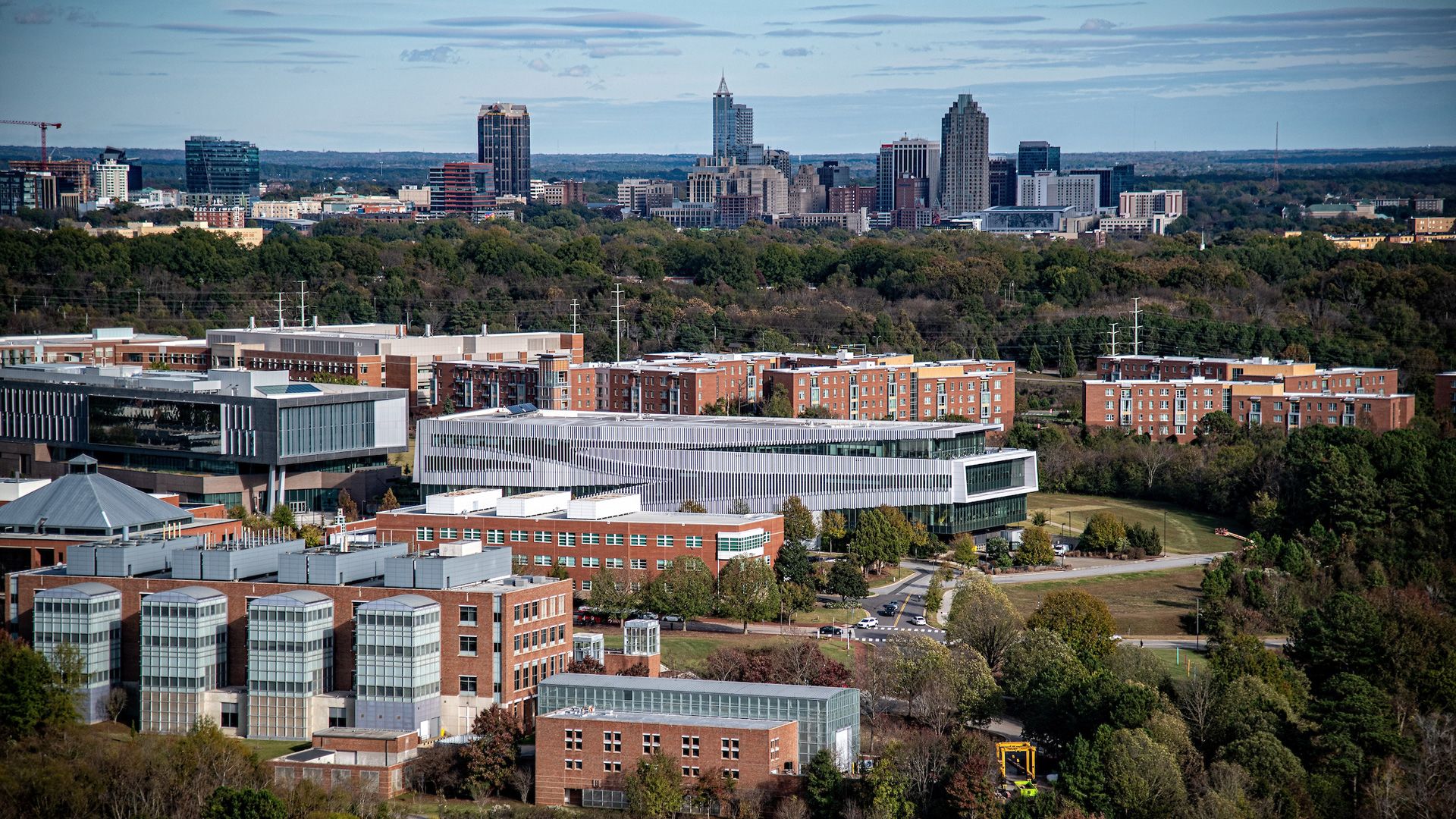
Centennial Campus sits in the heart of Raleigh (Courtesy of NC State University)
Centennial Campus sits in the heart of Raleigh (Courtesy of NC State University)
The Campus Connection
It may have come about by chance, but the fact that both LexisNexis and NC State University favor a bold red in their branding is a visual reflection of how closely the two organizations are aligned in their mission of developing talent and fostering innovation. Theirs is a relationship that began in 2014, when LexisNexis first put down roots in Raleigh on NC State’s Centennial Campus, initially in a four-story building previously occupied by enterprise open-source software company Red Hat and now in its new Venture III tech hub. There it sits alongside likeminded businesses and students and faculty from the university’s College of Engineering and Wilson College of Textiles.
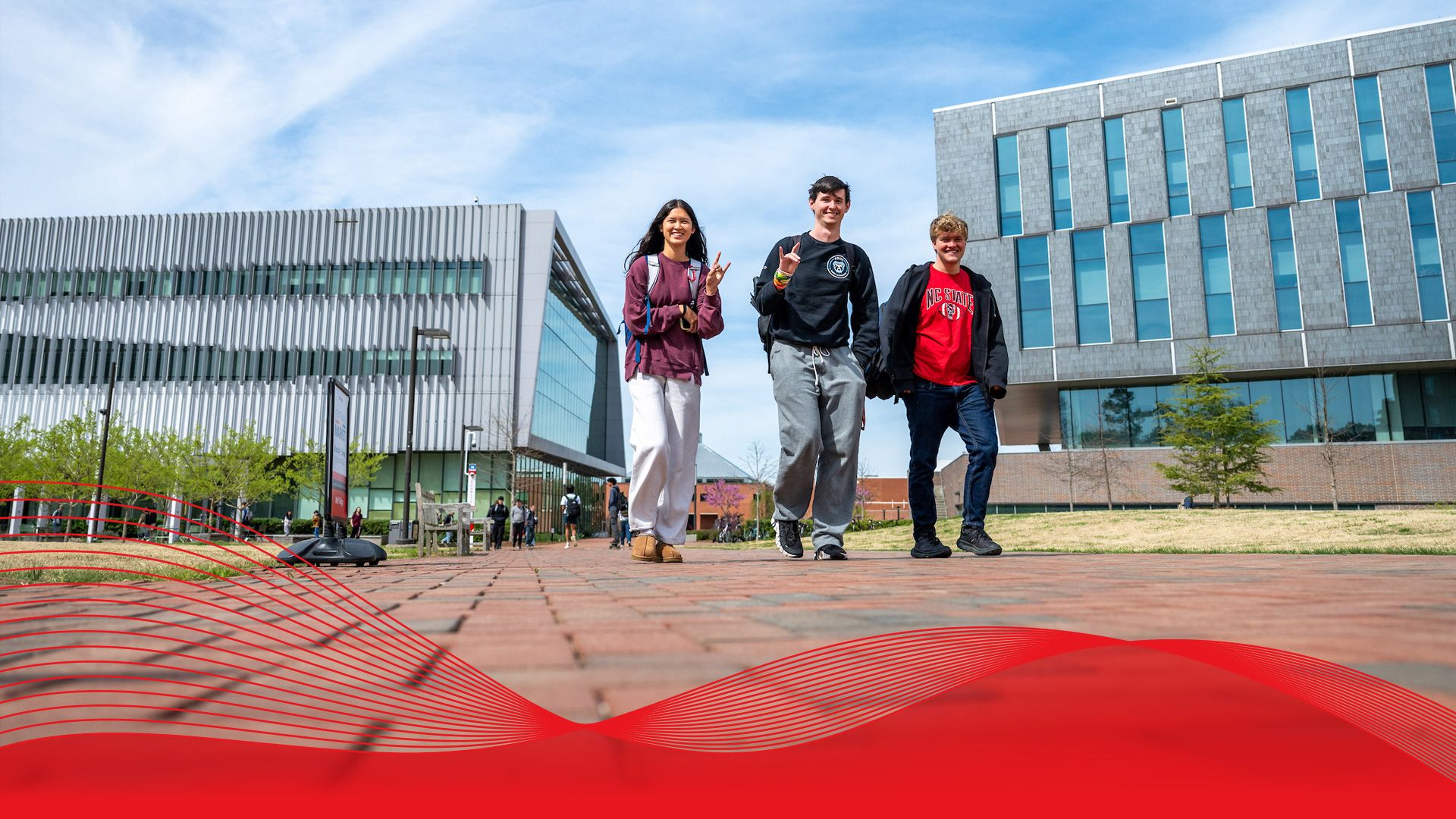
Whether in student cafés, libraries, classrooms, lecture halls or on quads and green spaces — often filled with the sound of live music — the intermingling of company and university is tangible. “And we’re only 300 steps from the computer sciences department,” says Pfeifer. “So we are literally embedded in the learning environment.”
This intermingling has been made possible thanks to NC State’s goal of using business development to drive the state’s growth by offering dedicated campus space to companies like LexisNexis. “When you bring industry in, that helps with the economic development piece,” says Dawn Mason, assistant vice chancellor of partnerships at NC State. “And having industrial partners enables the university to give students a chance to learn in a way they might not otherwise be able to.”
For companies, the benefits are equally appealing.
“People can walk two blocks down the street and have access to the facilities and the human capital (including students) that the university provides,” explains Mason. “Then there’s the energy and vibe of being on a campus. It keeps you young and thinking more creatively about corporate challenges.”
Campus companies play an active role in the academic community through internships, mentorships, presentations, panel discussions and sponsored research projects. “We tailor those engagements to the specific entity and what they are driving for,” explains Mason. “There’s no end to the opportunities on campus. And this institution has some very niche research capabilities that you wouldn’t find anywhere else.” For LexisNexis, for example, access to NC State’s quantum computing research capacity was a powerful draw.


However, topping the list of reasons the company settled on Centennial Campus as a home for its hub was the rich supply of talent it would have on its doorstep. And in this, the choice of location has paid off: Some 70-80% of its new hires come from NC State, making LexisNexis the largest employer on campus.
One way the company boosts this talent acquisition is through LexisNexis Aspire, a year-long full-time program for students in disciplines such as software engineering, data science and cyber security. Undergrads and recent graduates work alongside LexisNexis staff building tools and products. Students gain real-life experience, degree credits — and often a job offer. “It’s a direct connection for talent acquisition,” says Pfeifer. “That’s something every company needs but in technology, access to high-quality talent is critical.”


Collaboration by design
The carpentry adage “measure twice, cut once” has long been applicable to software development. In the tech business, the cost of specialized coding expertise makes getting it right the first time critical. This means undertaking extensive discovery (the user research needed to define an objective) and then testing, prototyping and refining an idea before starting to build the software — a process taking up to three months.
Enter agentic AI. With its ability to model strategies and conduct complex tasks at speeds humans would find impossible, it's transforming software development. “With agentic coding, you can build something almost as quickly as the customer can tell you what they want,” says Greg Dickason, chief technology officer at LexisNexis. “You can test code with an initial set of customers and if you don’t like it, you can change it. And that three-month timeframe is now down to less than a week.”
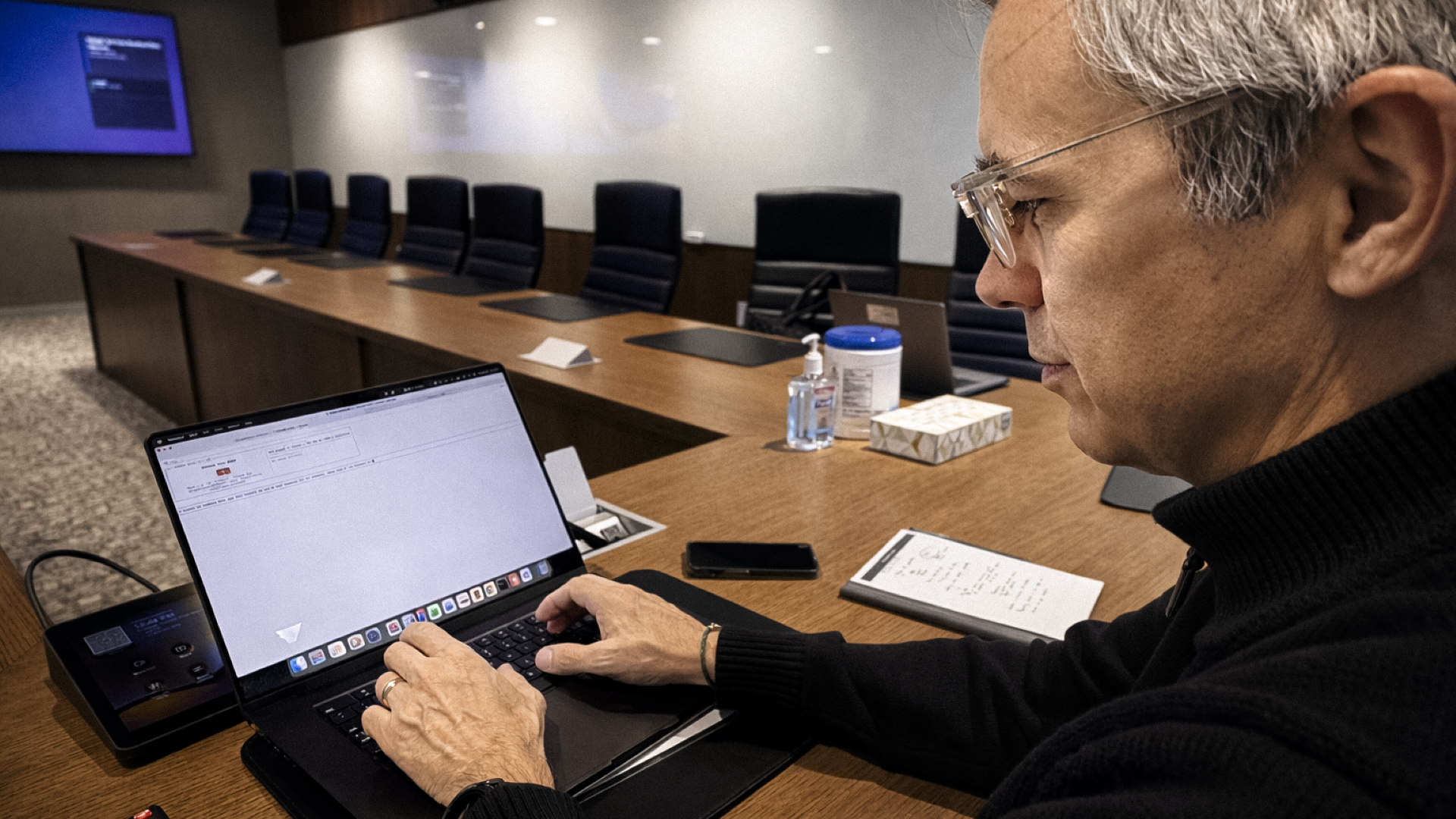
Greg Dickason uses AI to accelerate software development
Greg Dickason uses AI to accelerate software development
This fundamentally changes ways of working. “When I was a software engineer, the product managers did all the discovery, and I would write my code and send it back to them,” he recalls. “Now I’m involved in the conversation, and I understand what customers want — it’s much more people driven and much more collaborative.”
It's also much more in-person. At LexisNexis, while staff can work from home a couple of days a week, most spend the other three in the office. “And whenever we have deep problems, we fly people in because if you have 10 people in a room whiteboarding, it’s hard if someone is on a screen,” says David Ganote, who as head of product planning at LexisNexis leads the team behind Lexis+ with Protégé, LexisNexis’ flagship legal workflow tool for drafting, research and analysis.
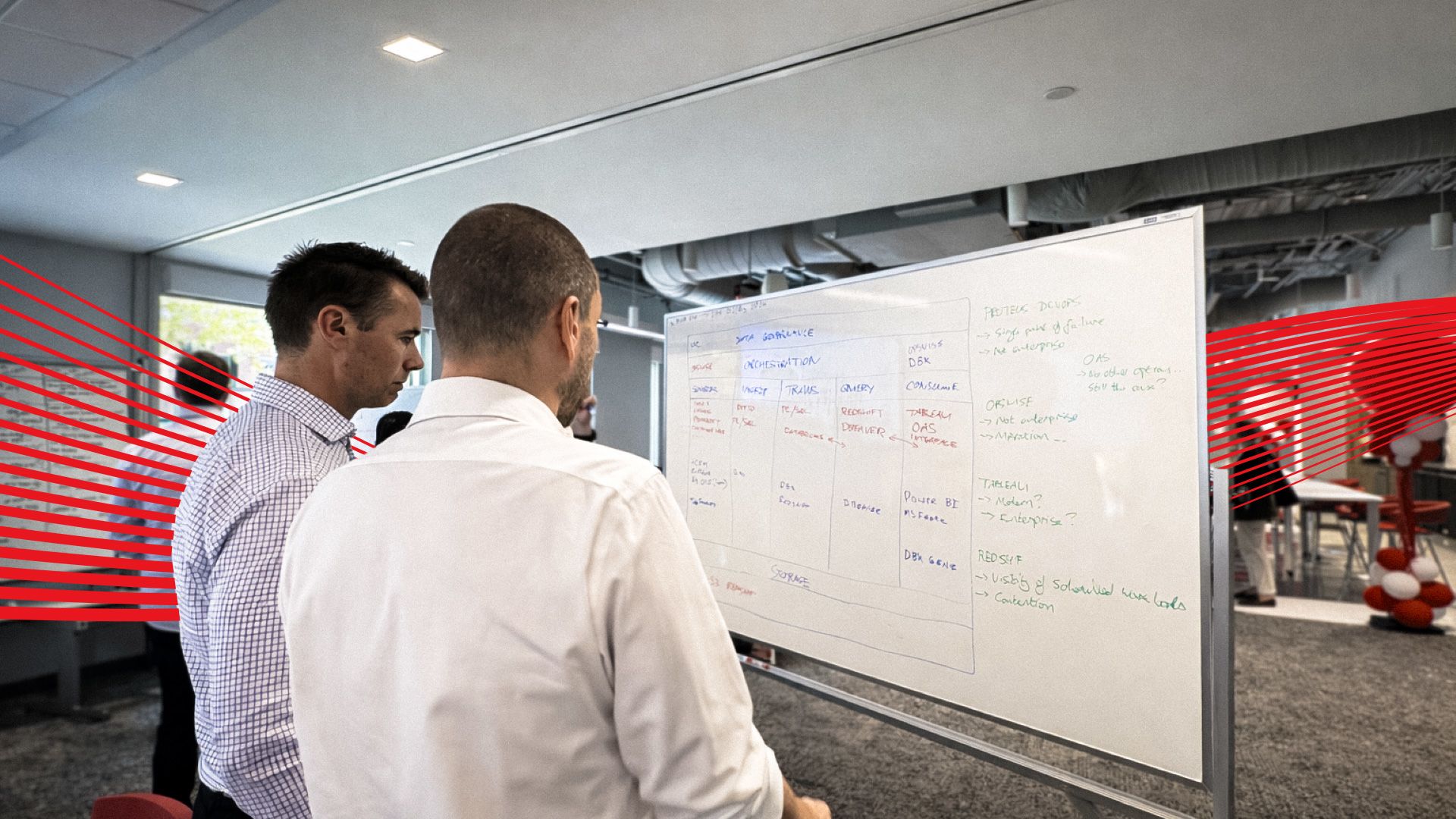
Paradoxically, in fact, while technology was what enabled people to work remotely, technology is now bringing them back together, since activities such as vibe coding demand the kind of rapid iteration that’s far easier to do with everyone in the same room. “Being in the office together, we’re able to innovate much more quickly, which speeds up the decision-making process,” says Simberg. “You’re seeing things come to life in real time. And the huge benefit is creativity and faster time to market.”
Recognizing the power of in-person collaboration, LexisNexis knew it needed to design everything in its new tech hub — from office layouts and desk configurations to furniture and other equipment — to foster this. In the new hub, for example, flexible working spaces can be configured for whatever task a team is working on. Pods create discrete areas within open-plan spaces where teams can gather for brainstorming or spontaneous meetings. Large tables in open areas and rooms where everything is a writable surface encourage the exchange of ideas.
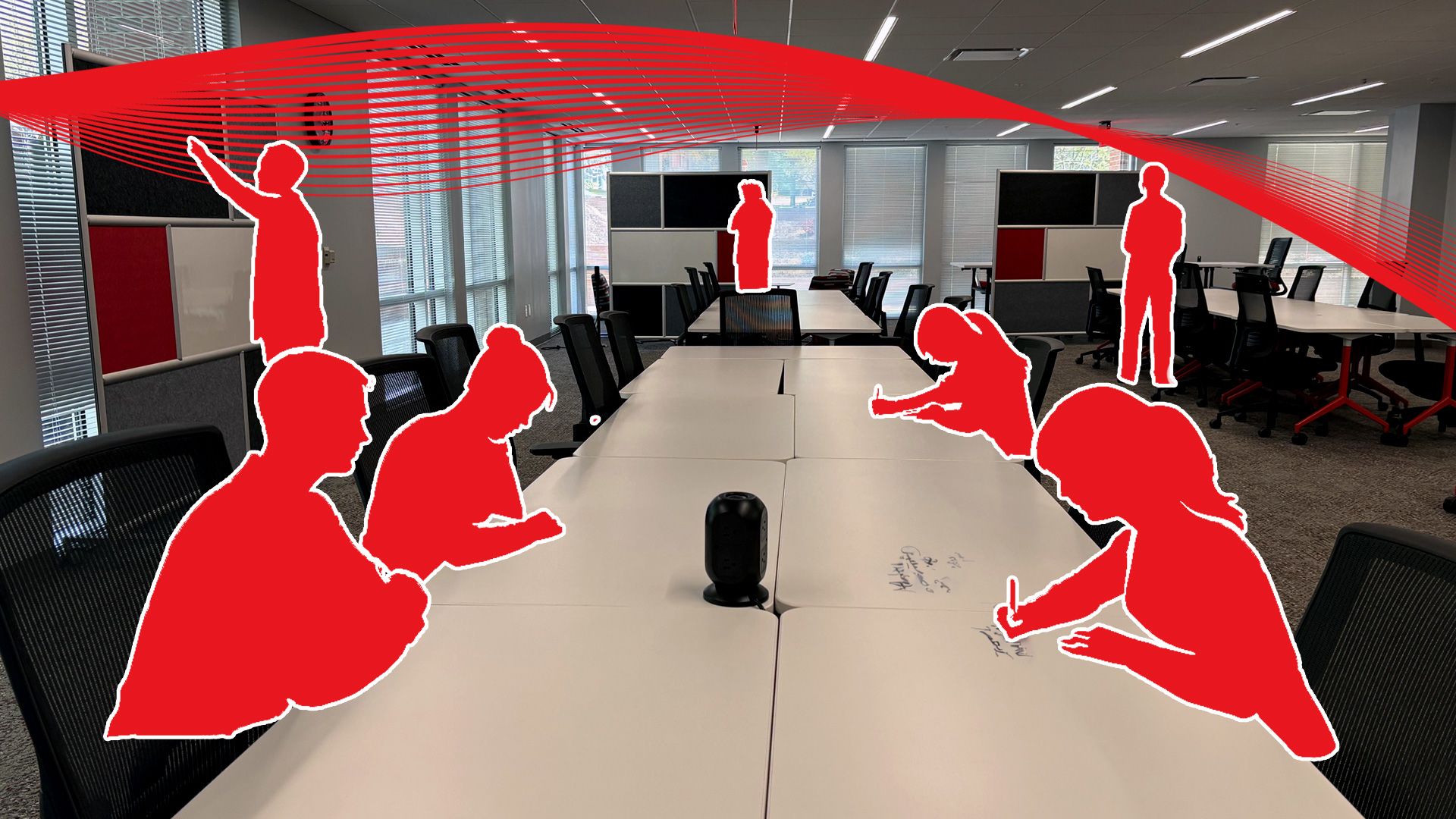
“We want to showcase innovation, iterative brainstorming, design thinking and collaborative design,” says Pfeifer. “It’s lots of sticky notes and whiteboards.”
Teams work together at a whiteboard in spaces designed for collaboration
Teams work together at a whiteboard in spaces designed for collaboration
Rooms where everything is a writable surface encourage the exchange of ideas
Rooms where everything is a writable surface encourage the exchange of ideas




To unlock new levels of productivity for legal professionals, AI tools such as Protégé take on workflow steps once controlled by humans. However, this raises the bar when it comes to security, transparency and trust. And this is where technological and human intelligence come together — all underpinned by collaboration.
With every piece of LexisNexis software development adhering to the company’s AI principles, teams are able to explain to customers exactly how the AI is working and why. “That’s what teams spend a lot of time unpacking,” says Pfeifer. “And that’s something else that is substantially enhanced by working together.”
Added to this is the layer of security the company offers its customers by providing a reference for every piece of data they access. “That’s one of our secret sauces,” says Dickason. “A lawyer might want to find out the statute of limitations for a trip-and-fall lawsuit in Ohio. We need to reference the correct case law and give them an answer that’s referenceable.”
This, of course, has always been true of the products LexisNexis builds. But now, it happens more collaboratively. “For customers, it’s providing better access faster. But you don’t lose quality or reduce trust,” says Simberg. She cites a recent initiative that focused on formatting changes in one of the company’s legal products. The professionals involved might once have been in different parts of the office or even in different locations. Now, she explains, everyone is sitting together.
As she works with leaders and teams building new products and features, Simberg is watching the transformation with excited fascination. “The pace of innovation I’ve seen in the past few months has been astounding,” she says. And beyond speed and creativity, she points to a further benefit of the tech-enabled workplace evolution. “Right now,” she says, “I’m having the most fun I’ve had in my entire career.”