Industry Insights

China's Revised Punitive-Damages Interpretation for IP Disputes — Fa Shi [2026] No. 7, in force 1 May 2026
Written by Menghang Jiao , Counsel , Gen Law Firm Part I — The Revision On 7 April 2026 the Supreme People's Court promulgated a revised Judicial Interpretation on punitive damages in IP civil cases (Fa Shi [2026] No. 7), which enters into force on 1 May 2026 and supersedes Fa Shi [2021] No. 4. The two-limb test — willful infringement combined with serious circumstances — is preserved, as is the established hierarchy...

Assigning Intellectual Property Rights in Hong Kong: Formalities, Partial Assignment and Future IP Rights
In transactions involving IP rights, intellectual property can be a value driver or a hidden risk. Because these rights are intangible, legal and practical issues around ownership, scope, formalities, and recordal may only come into focus when a transfer is being documented or reviewed. This Practice Note, ' Assigning Intellectual Property Rights' , discusses the statutory provisions governing the assignment of IP rights...

How know-how is protected, licensed and transferred in Hong Kong
Know- how can be a value driver or a hidden risk in commercial arrangements. Because it is intangible and often embedded in confidential information, processes and technical expertise, the main legal issues usually arise in how it is defined, protected, transferred and commercialised under Hong Kong law. This complimentary Practice Note on Know-how – protection and licensing , produced in partnership with Benjamin...
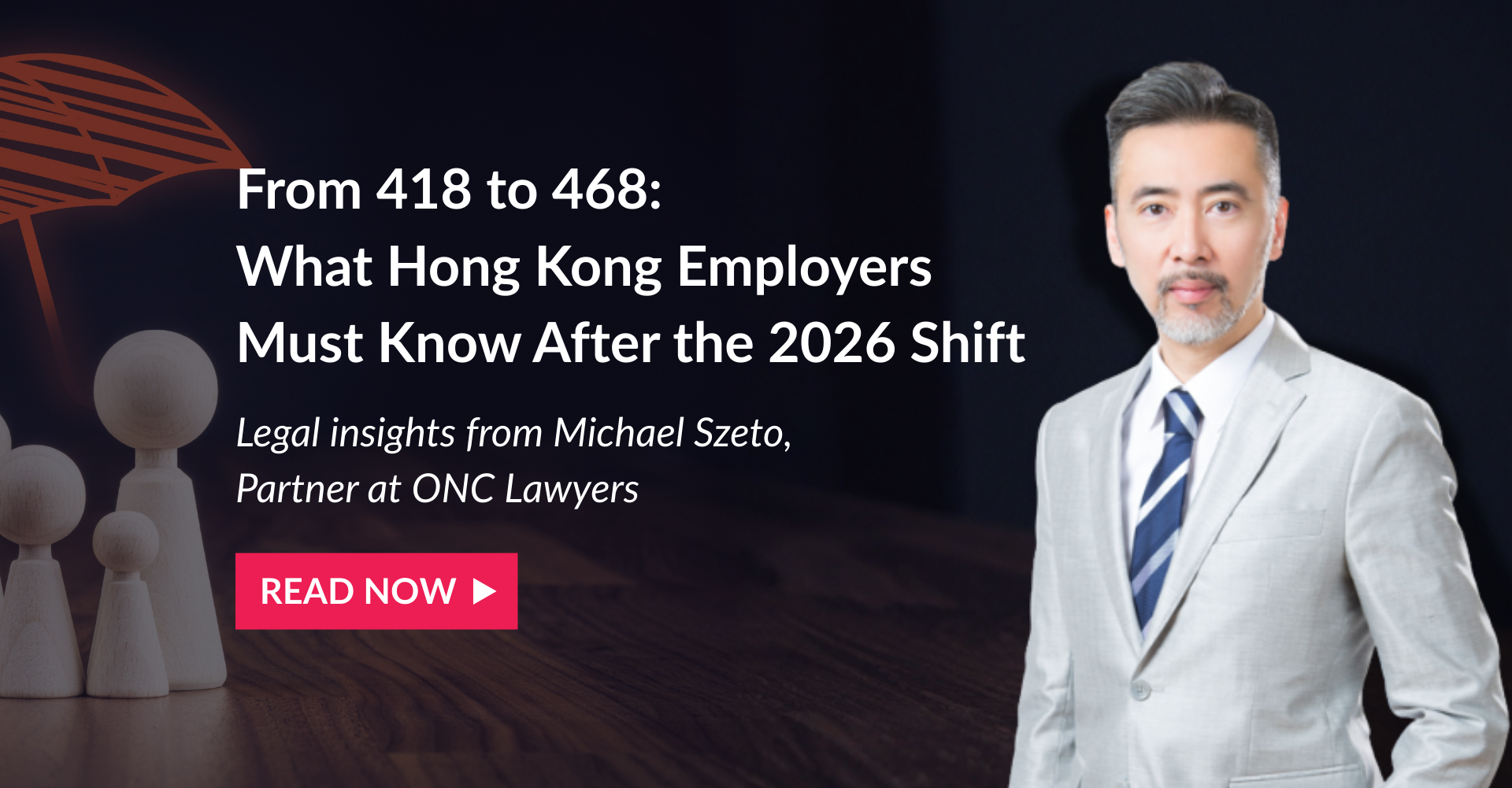
From 418 to 468: What Hong Kong Employers Must Know After the 2026 Shift
On 11 February 2026, LexisNexis hosted an insightful webinar titled "Employment Law in Focus: The New '468 Rule' and Emerging Termination Risks." The session was led by Michael Szeto , Partner at ONC Lawyers, who provided expert analysis on the recent legislative shift in Hong Kong’s employment landscape and explored critical case studies regarding workplace conduct and contract stability. The Transition to the "468...

Intellectual Property: Core Challenges in Mergers and Acquisitions
In M&A, IP can be a value driver, but its intangible nature means legal and practical challenges are often only identified through a thorough review of the target’s documents and records. This Practice Note, produced in partnership with Sakinah Sat of Des Voeux Chambers, sets out practical considerations across ownership, transfer, third-party risk, and cross-border issues that can materially impact transaction value...

New and emerging technology: practical IP protection and enforcement considerations
Innovation cycles are shortening, collaboration is becoming the norm, and technology-driven assets increasingly sit at the centre of enterprise value. Against this backdrop, legal teams are expected to do more than “register and react”. They must help businesses protect, commercialise, and enforce IP rights while adapting to new operating models and evolving regulatory expectations. This new Practice Note produced in...
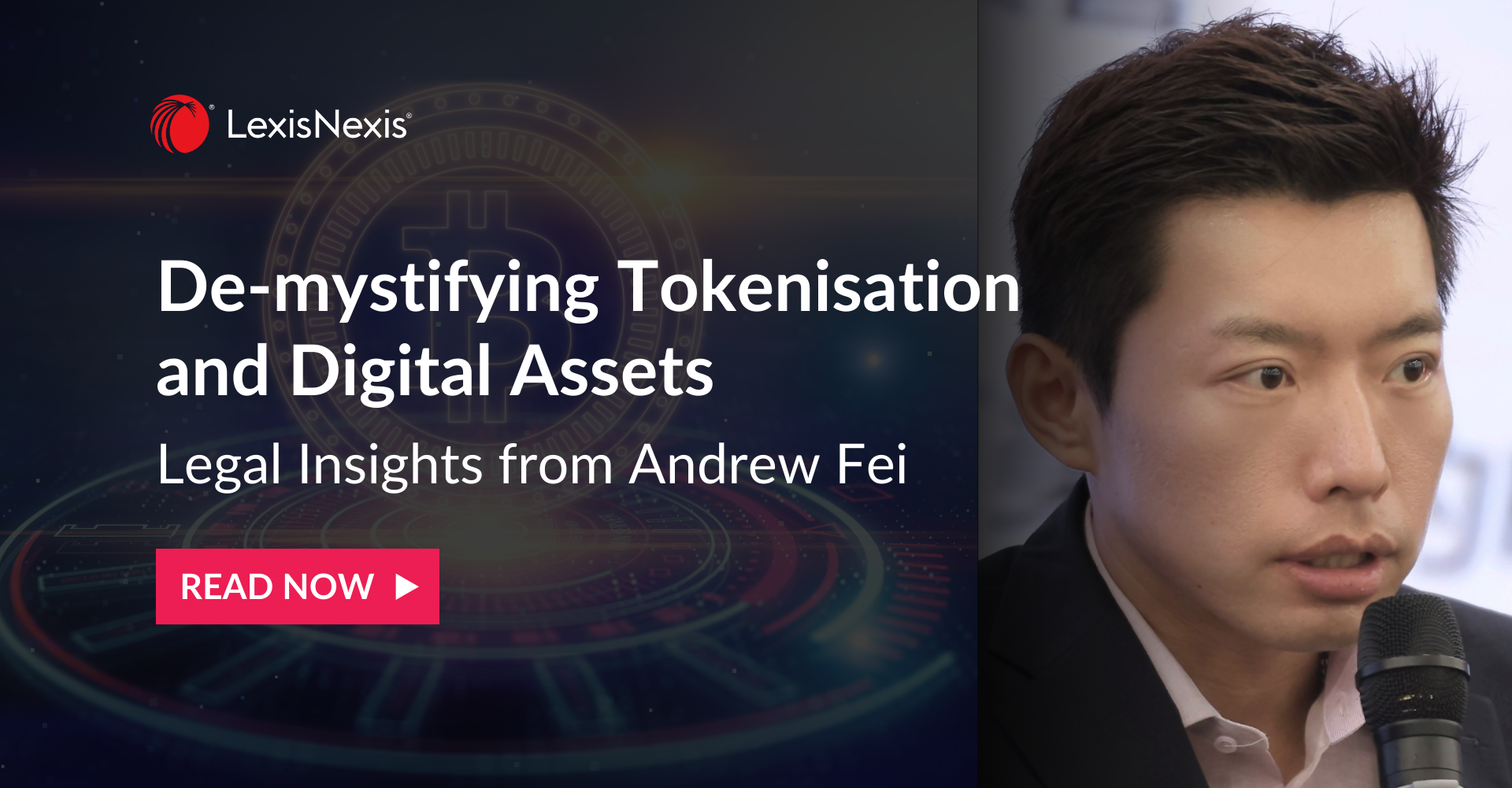
De-mystifying Tokenisation and Digital Assets: Legal Insights from Andrew Fei
On 27 January 2026, LexisNexis hosted an exclusive webinar featuring Andrew Fei , a Partner at King & Wood Mallesons, who provided a clear and practical guide to the rapidly evolving world of tokenisation. With over 15 years of experience in finance law and digital assets, Andrew’s clients include the Hong Kong Monetary Authority, all three Hong Kong note-issuing banks, other global financial institutions, listed companies...

How to Draft an ESG Policy: A Practical Approach
An environmental, social and governance (ESG) policy is the centre piece of an organisation’s ESG strategy, a concise statement of ESG intentions, focus areas and commitments. Done well, it sets expectations for how ESG considerations will be integrated into business decision-making (and, for financial institutions, investment decision-making), and provides a clear line of sight from ambition to implementation. This...

Social media and user-generated content: practical guardrails for brands
User-generated content (UGC) is now a staple of digital marketing. More and more, businesses encourage consumers to contribute content on social media, then incorporate those contributions into consumer-focused advertising and campaigns. UGC, when done well, can boost reach, strengthen connection with a target audience, and help brands better understand what their audience cares about. The challenge is that UGC can...

Anti-arbitration injunctions in Hong Kong: Understanding the courts’ cautious approach
When parties agree on a dispute resolution mechanism, the expectation is that any subsequent disagreement will follow that agreed path. Yet disputes sometimes escalate in ways that diverge from the contract. For example, arbitration may be commenced in the wrong seat, mediation may be bypassed, or a second arbitration may be initiated after an award has already been issued. In these situations, the non-breaching party...

AI and Copyright: Navigating Authorship
As artificial intelligence continues to reshape content creation, questions around copyright and authorship have moved to the forefront of the convesation. Hong Kong’s Copyright Ordinance (Cap 528) provides a statutory structure for determining authorship, but applying these provisions to AI-generated works presents new challenges. This new Practice Note from the Lexis+ Practical Guidance Hong Kong Intellectual Property...

Meet the Class of 2025 | Celebrating Excellence and Innovation in Law
LexisNexis is proud to announce the winners of the LexisNexis ® 40 UNDER 40 Awards 2025 and the LexisNexis ® ELITE Awards , celebrated at our recent award ceremony. This milestone event marked two arcs of excellence: recognising rising stars who are shaping the future of law while delivering for clients today, and honouring individuals and teams whose innovation has translated into real-world impact. 40 UNDER 40...

Clarity and Certainty: Getting Settlement Offers Right in Hong Kong
Settlement negotiations can be a turning point in litigation, a chance to achieve resolution without protracted costs or risk. Yet, an unclear offer or poorly drafted agreement can undo all progress. This new Practice Note on Settlement Offers and Documents to Record Settlement Agreements provides comprehensive, practical guidance on making and formalising settlements with clarity and precision. The Practice Note outlines...

Harness Social Media Without Exposing Your Business to Legal Risk
In an age where a single tweet or LinkedIn post can amplify a brand, or collapse a reputation, understanding the legal and regulatory pitfalls of social media has never been more important. That’s why our latest complimentary Practice Note focuses on what every business must know before logging on. Key issues at a glance Our Practice Note dives into the major regulatory and reputational risks of business use of social...

Navigating Asset Management under Hong Kong’s Securities and Futures Ordinance (Cap 571)
In Hong Kong’s fast-evolving financial market, asset management activities are subject to a robust regulatory regime designed to protect investors and maintain market integrity . For legal professionals advising fund managers, financial institutions, or fintechs, understanding the Securities and Futures Ordinance (Cap 571) (SFO) is essential. To support practitioners, we are pleased to offer a complimentary Practice...
The Extraterritorial Reach of China’s Amended Anti-Unfair Competition Law: Legislative Evolution and Practical Implications
by He Jing, Steve Zhao, GEN Law Firm *The views expressed in externally authored materials linked or published on this site do not necessarily reflect the views of LexisNexis Legal & Professional. The 2025 amendments to China's Anti-Unfair Competition Law (AUCL) represent a significant development in the country's competition regulation framework. To a large extent, the new amendments resemble pricing regulations...

Trustees’ Powers and Duties under the Trustee Ordinance (Cap. 29): A Practical Guide
Trustees in Hong Kong are entrusted with wide-ranging powers to invest and manage trust property. But with those powers come equally significant duties of care, both statutory and under common law. A failure to balance prudence, fairness, and compliance can expose trustees to risk and undermine the trust’s purpose. Our latest Practice Note, produced in partnership with Anna Chan of Oldham, Li & Nie, provides clear,...

Inadequate Awards in Arbitration: What You Need to Know
In arbitration, the final award is intended to bring certainty and closure. However, under Hong Kong’s Arbitration Ordinance (Cap 609), even minor procedural oversights can render an award vulnerable to challenge or enforcement difficulties. Ensuring compliance with the Ordinance’s mandatory requirements is not optional—it is essential. From the form and content of the award to the strict timelines for corrections and...

Hong Kong’s Professional Investor Regime: What Legal Professionals Need to Know
Recent updates to Hong Kong’s professional investor regime have introduced key changes that impact how intermediaries assess and engage with investors. If you advise on financial services or manage compliance, here’s what you need to know. Key Highlights: Code of Conduct Updates: A mandatory suitability clause must now be included in client agreements, ensuring product recommendations align with the client’s financial...

LexisNexis®︎ 40 UNDER 40 Awards 2025: Final Week to Nominate Asia’s Legal Trailblazers
We’re excited to share that nominations are open for the LexisNexis® 40 UNDER 40 Awards 2025, a prestigious initiative celebrating the rising stars of Asia’s legal industry. With just one week left to submit nominations, this is your chance to spotlight the young professionals who are redefining legal excellence across the region. These awards honour legal professionals aged 40 or under who are making a meaningful impact...

Introduction of SPACs in Hong Kong
As Hong Kong continues to strengthen its position as a leading financial centre, the introduction of a dedicated SPAC listing regime under Chapter 18B of the HKEX Listing Rules marks a significant step forward. But what does this mean for legal professionals advising on capital markets, M&A, or corporate structuring? To help you stay ahead, download this complimentary Practice Note: “Introduction of SPACs in Hong Kong...

Understanding SFC Investment and Borrowing Restrictions for Hong Kong Retail Funds
Legal professionals advising on Hong Kong retail funds must stay aligned with the SFC’s evolving regulatory framework. Our new Practice Note, Hong Kong Retail Funds – Investment and Borrowing Restrictions , offers a clear, practical overview of the key requirements under Chapters 7 and 8 of the UT Code. Inside, you’ll find guidance on: Investment limits and diversification rules Derivative fund classification...
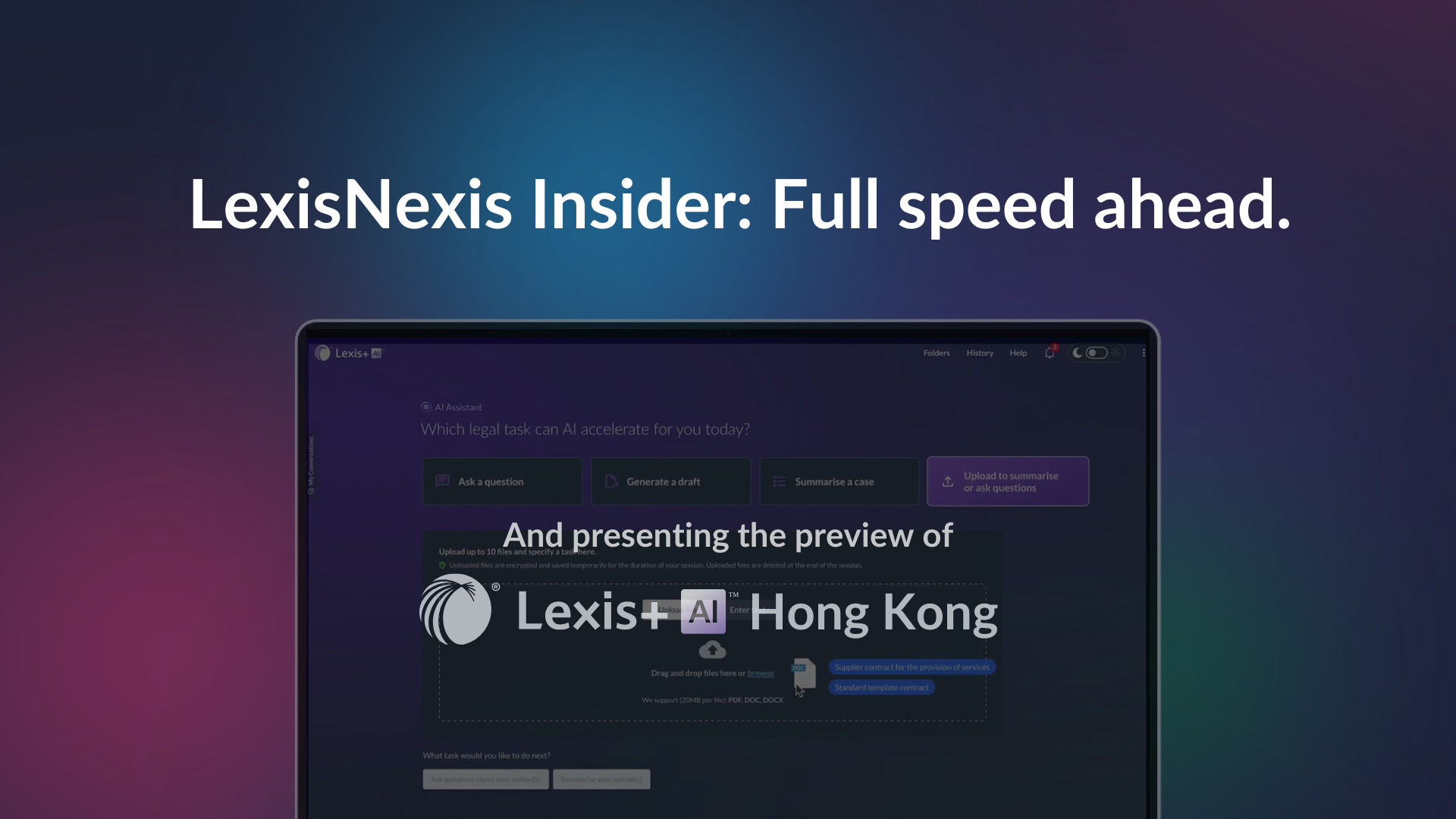
Hong Kong Lawyers Can Expect Saving 11 Hours Weekly with Asia’s First Launch of Lexis+ AI in July 2025
Lexis+ AI delivers secure generative AI tools that fuel efficiency, effectiveness, and reliable results for the modern Hong Kong lawyer HONG KONG, March 6, 2025 – LexisNexis® Legal & Professional, a leading global provider of AI-powered analytics and decision tools, today announced that Hong Kong would be the first in Asia to launch Lexis+ AI TM , a generative AI solution designed to transform legal work, in July 2025...

Mitigating ESG Risk Checklist
Produced in partnership with Louise Barber, Jason Blakey, Peter Crossley, Hannah Kendrick, Matthew Kirk, Caroline Noblet, Clifford Sims, Jonathan Chibafa, and Anita Lloyd of Squire Patton Boggs (UK) LLP. This checklist pertains to environmental, social, and governance (ESG) considerations that have become crucial for businesses, driven by regulatory requirements, stakeholder demands, and the recognition that ESG factors...
LexisNexis Celebrates Successful 5th In-House Legal and Compliance Conference
Hong Kong, December 2, 2024 –LexisNexis® Legal & Professional, a leading global provider of information and analytics, is thrilled to announce the resounding success of its 5th In-House Legal and Compliance Conference held on November 26, 2024, in Hong Kong. The event, themed "Elevating Legal Perspectives: Integrating Market Insights and Generative AI," brought together about 150 attendees, including senior in-house legal...