Latest Articles
Summary Getting on the AI bus The end of scut work Billable hours under scrutiny Resolve early, fight less – and get on with your life Funding justice beyond the courtroom Originally...

Summary What are Legal AI Workflows? How Legal AI Workflows Differ from Task-Based AI Tools What Legal AI Workflows Look Like in Practice Why Workflows Matter in New Zealand Legal Practice ...

Summary Employee Engagement is Falling as AI is Rising The Human Side of AI Adoption Accelerating Onboarding and Upskilling Increasing Job Satisfaction Through Smarter Tools Empowered Teams...

Summary Who needs to be in the room The leading lights of AI research Procurement as power The case against light-touch regulation Regulation as a verb What lawyers will take away Five...
Summary When executive power goes unchecked A chance for solidarity among common law jurisdictions New Zealand at the forefront Beyond the minutiae The human connection Creating environments...
Summary
- Getting on the AI bus
- The end of scut work
- Billable hours under scrutiny
- Resolve early, fight less – and get on with your life
- Funding justice beyond the courtroom
Originally published by NZ Lawyer. Republished with permission.
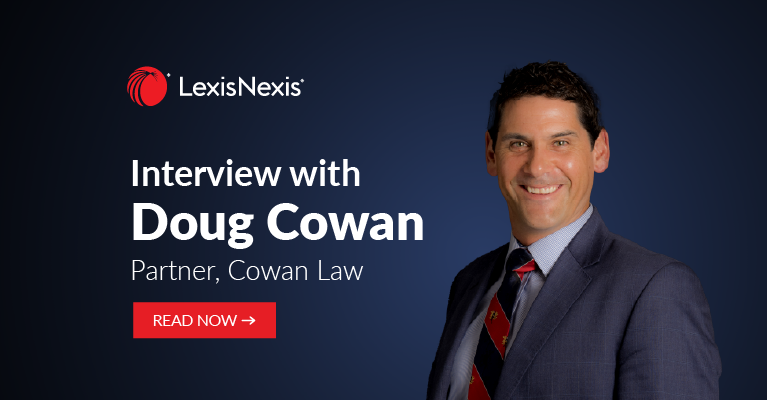
Doug Cowan recently got a great view of what legal practice might look like five years from now.
A client, unhappy with a ruling in a commercial dispute, fired up not one, not two, but seven different AI tools to look at the analysis in the ruling. He cross-referenced the outputs, synthesised a single analytical document, and handed it to Cowan.
To Cowan’s surprise, when his own team produced their independent analysis, the two documents nearly matched. Far from the media narrative of AI producing wildly inaccurate legal assessments, referencing cases that don’t exist or overly optimistic damages estimates, the client’s document had pretty much nailed it.
The key factor here? Cowan’s client has an IT background and knew how AI works. While the average person today may not be able to get AI to produce such impressive output, in five years’ time that may not be the case.
“It was amazing to see this guy come through with seven different development pieces melded into his final piece. It wasn’t word-for-word [the same as] what we had, but point by point, issue by issue, it largely matched up,” said the founding partner at Cowan Law in Auckland.
The incident made Cowan realise two things; that lawyers who don’t get on board with AI and level up their advice will quickly become expensive and potentially superfluous to needs; and that the role of lawyers in the future would be very different from what it has been historically.
“Clients are shaping the scope of what they want you to do [far more],” said Cowan. Pretty soon, more lawyers are going to find themselves guiding savvy clients more with small course corrections and subtle strategy tips than through explaining basic legal concepts.
AI will be able to help lawyers in this new capacity.
“You tell them, ‘No, your scope’s limited’ or ‘You’ve got to think about X, Y and Z’ based on your own experience... but AI can help you in that and also to analyse and counter them if they come up with a plan that puts all their eggs in one basket.”
Cowan’s experience with the IT specialist brought everything into focus. “Scut work” is being absorbed by AI. The junior lawyer who historically has been indispensable by memorising case law or tracking down obscure citations is becoming a relic. Clients are scrutinising bills with new tools and new confidence. And the human skills like empathy, judgement, or the ability to read a room, are quickly becoming the skills that new lawyers should polish most.
In a nutshell, the nature of lawyering is transforming.
Getting on the AI bus
Cowan, who built his general practice from scratch after a decade of civil and commercial litigation, has become an outspoken voice on AI adoption among New Zealand lawyers. He was recently invited to speak on a panel hosted by LexisNexis New Zealand, and his firm adopted the company's legal AI assistant product Protégé™ in July last year. The decision was deliberate. "We thought we'd miss the bus otherwise," he said.
“Lexis+ AI (now known as Protégé) is a secure product that allows you to input what you need, so you can obtain detailed information and legal views immediately. AI is advancing at a rate of knots, and our entire firm uses it on most matters.”
His advice to the rest of the profession is similarly direct. Clients are already using general platforms like ChatGPT to shape the instructions they bring to their lawyers and to evaluate court and tribunal decisions at the other end of a matter. Lawyers who are not across the same technology risk being caught flat-footed.
He draws a clear distinction between general AI and the more specialised legal publishing platforms.
"Avoid the hallucinations and all the problems you've got with just general AI," he said. "Get on board with decent AI software providers."
The end of scut work
The arrival of AI in legal practice is doing something else as well. It is quietly dismantling the traditional pyramid structure of a law firm.
Cowan describes that structure plainly: equity partner at the top, then senior staff, then juniors at the bottom handling manual tasks. That model is under pressure. "You're hiring fewer and fewer juniors to do manual tasks," he said. "You're expanding those mid-level roles for lawyers who can supervise the AI or the AI teams."
What he calls "scut work" is disappearing. Photocopying, stickering, numbering, labelling, the grinding repetitive tasks that have long been the entry point for young lawyers, are being absorbed by AI. In their place, he sees a different role emerging. "You've got to work on being more of a systems architect, a problem framer," he said. "Know how to lead and design a legal strategy that you can plug into AI and select your agents and workflows and execute it that way."
Cowan sees the role of junior lawyers in this brave new world as an essential layer of quality control.
"The first 80% of work is done by AI, whether it's a draft or a motion or a contract or a research memo," he said. "You need to know what's sloppy, what's mass produced, what's unverified content. [Junior lawyers] become really personally accountable for every piece of advice you give or hand over to somebody senior for review."
This shift has changed what Cowan looks for when he hires. "We need somebody who's got everything that AI doesn't," he said. He listed the qualities he now values:
- Instinct, perception, and decision-making sensitivity
- High emotional intelligence and empathy
- The ability to sit down with a client, listen, and give direction
He is comfortable sending a lawyer who is one or two years qualified to take an initial brief. Good grades still matter, because they signal discipline and focus. But the person who simply burns long hours and has a photographic memory?
"You don't need somebody who's amazing with citations [anymore]," Cowan said.
Billable hours under scrutiny
The same forces reshaping staffing are bearing down on pricing. A task that once took a week can now take ten minutes. Clients know this, and they are asking harder questions.
Cowan is candid about the pressure. "The pricing has become traditional models under strain," he said.
His firm is shifting certain clients to monthly retainers for ongoing matters and moving toward fixed or outcome-based fees more broadly. Accuracy in estimating costs has become a professional obligation. "Clients expect you to estimate really accurately how much it's going to cost," he said.
He has seen Law Society reports where cost estimates blew out by 400%, with the assessor reducing the firm's fee despite the quality of the work. The finding, as Cowan summarised it, was plain: people need to be given fair warning of a large bill.
He also pointed to predictive pricing as an emerging tool, where algorithms analyse a firm's historical data to produce more accurate cost forecasts upfront. "Firms are using the algorithms to analyse historical data to work out forecasts and costs with much better accuracy," he said.
Resolve early, fight less – and get on with your life
If technology is one thread running through Cowan's practice, early dispute resolution is another.
His firm has appeared in only two court hearings in four years of relationship property work, a deliberate outcome. He described the approach he takes with separating couples who cannot agree on a division of assets. "Do you want to lose 30% of your wealth or 60% of your wealth to lawyers?" he said. "Or do you just want to be smart and commercially sensible about this?"
The same philosophy applies across his construction practice, where subcontractors and head contractors fall out over money, terms, or fault. Getting matters resolved quickly, he argues, is better for commerce and better for clients. One thing he gave up on long ago was the harshly worded letter. "They don't work," he said. "It has the opposite effect."
If a letter containing a settlement offer reaches the other side loaded with aggressive language, the last thing the recipient wants to do is soften their position. His firm stopped writing that kind of correspondence, and it is now embedded in the firm's operating philosophy.
Junior and intermediate staff are drawn into this early resolution work deliberately, sitting alongside senior lawyers to learn the approach firsthand. "Rather than sending off our junior and intermediate staff off to become Trojans of the grind," Cowan said, "we want them to be involved so they sit side by side, they learn off us and eventually they can take over."
Funding justice beyond the courtroom
Cowan is also thinking beyond his own firm. Concerned about access to justice for people who cannot afford legal help, he believes the profession should take more responsibility for funding community law centres rather than waiting for government.
Cowan supports a modest compulsory levy on every practising lawyer's annual fees. "You times that by about 18,000 lawyers in the country," he said, "suddenly you've got better funded community law centres, especially out in the provinces and the countryside."
The court delays that plague New Zealand's justice system also concern him. He welcomed the High Court's shift toward requiring all key evidence upfront, a change that limits the old tactic of building a case slowly to gain tactical advantage. "Those days are kind of over," he said. "You know the parameters of where the strength lies in your case or the weakness from day one."
For Cowan, all of these threads connect. A profession that adopts AI thoughtfully and flexibly, prices its work honestly, resolves disputes early, and funds access to justice for those who cannot otherwise afford it is one that justifies its place in public life.
Introducing Protégé Workflows – turn complex legal tasks into guided, repeatable processes. It helps you complete legal tasks across your entire practice area, using secure, end-to-end workflows grounded in authoritative legal content and your firm’s own knowledge. Book your free demo of Protégé by submitting the form below.
Explore Protégé workflows now →
Register for the upcoming live webinar – Introducing Protégé workflows and discover how to transform complex legal tasks into guided, repeatable processes.