
13 Feb 2026
Federal Appellate Litigation Analytics Powered by Big Data
Lex Machina®, the LexisNexis® Legal Analytics® platform, delivers comprehensive data and exclusive insights for hundreds of thousands of civil appeals to the federal circuit courts. For each appeal, Lex Machina shows companies and law firms which party prevailed, how long the appeal took, and key experience metrics for the judges, lawyers, and law firms involved. As of January 2026, this includes detailed insights into more than 500,000 appeals.
The Legal Analytics Platform for Civil Appeals
Lex Machina covers the full universe of civil cases filed in the U.S. federal courts of appeals since 2012. Our appellate data begins with records from PACER for all thirteen federal circuit courts. Although most of those cases originate in federal district courts, the dataset also includes civil appeals from the Patent Trial and Appeal Board and other administrative tribunals.
Using a variety of technologies along with expert human review, Lex Machina cleans, enriches, and structures basic information received from PACER. This process includes correcting errors that range from minor spelling issues to complex data inconsistencies, extracting records not reliably captured in basic PACER filings, and carefully tagging and categorizing cases, docket entries, and documents.
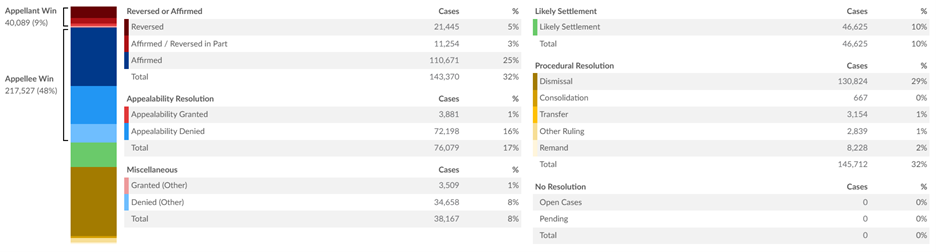
Lex Machina provides companies and law firms with crucial intelligence for the outcomes of appeals to federal circuit courts.
Beyond appellate resolutions, Lex Machina also has comprehensive and dynamic analytics on three different types of appealability rulings in federal circuit courts:
- Permission to Appeal: For many interlocutory appeals and in certain other circumstances, the circuit court must grant permission before an appeal may proceed.
- Certificate of Appealability: A certificate must issue before a party may appeal the denial of a writ of habeas corpus.
- Petition for Review: Parties may seek circuit court review of administrative decisions issued by U.S. government agencies.

Lex Machina provides comprehensive and dynamic analytics on appealability rulings in federal circuit courts.
Analytics for Appellate Litigation Specialists
For appellate practitioners, analytics covering more than 500,000 federal civil appeals directly translates into better appellate strategy and stronger client advice. Lex Machina enables firms to evaluate how each district judge’s decisions have fared on appeal and assess how often appellants or appellees prevail in comparable cases. These insights allow firms to set realistic client expectations and make data-informed decisions about which arguments to pursue on appeal.
For law firm administrators and business development professionals, appellate analytics enable data-informed lateral recruiting and more credible pitches to prospective clients. By grounding marketing materials and client proposals in objective appellate performance data, firms can distinguish their experience and competitive strengths in a way that resonates with discerning clients.
For companies and in-house legal teams, analytics from Lex Machina support more informed decisions about whether to pursue an appeal, how long it may take, and what it may cost. The data also helps organizations identify outside counsel with proven appellate experience. By grounding appellate strategy in objective data rather than anecdote, companies can manage risk more effectively, align legal decisions with business priorities, and communicate clearer expectations to internal stakeholders.
Comprehensive Coverage Across Courts
Federal circuit court analytics in Lex Machina complement comprehensive outcome information for millions of lawsuits in federal district courts and an expanding range of state courts – now including docket-level data for more than 1,300 venues.
Is your team ready to make data-driven decisions from complaint through appeal? Visit the Lex Machina product page for more information and to sign up for a free demonstration and customized analytical report.